


EL RENO — Congressional language that has blocked the transfer of federal land at historic Fort Reno for more than a decade would become permanent under provisions in the pending 2026 farm bill, raising new questions about the future of the site and long-running claims to the land by the Cheyenne and Arapaho Tribes of Oklahoma.
Reggie Wassana, governor of the Cheyenne and Arapaho Tribes, has repeatedly disputed arguments that prior federal settlements extinguished the claim.
“They say that we were paid for it,” Wassana said in an interview. “We haven’t been paid for it.”
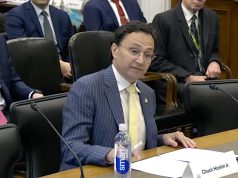
Wassana was scheduled to testify before the U.S. House Subcommittee on Interior, Environment, and Related Agencies on Tuesday, but he did not appear after travel disruptions. His written testimony (embedded below) was entered into the congressional record.
In that statement, Wassana argued the Fort Reno property “sits on land taken from the Cheyenne and Arapaho by federal action” and that returning it would “acknowledge and remedy that dispossession.”
He also pointed to internal federal legal findings, including a U.S. Department of the Interior opinion concluding the tribes have a “credible, equitable claim” to land not included in prior settlements.
A section of the current farm bill would amend a provision of the 2008 Food, Conservation, and Energy Act that bars the U.S. Department of Agriculture from declaring the Fort Reno Agricultural Research Service facility in El Reno as excess property or transferring it to another entity.
Previous versions of the restriction included an expiration date. The new language would remove that end date and effectively make the prohibition permanent unless Congress later changed the law.
The provision appears in the Farm, Food, and National Security Act of 2026, the House Committee on Agriculture‘s long-awaited update to federal farm policy. Committee members approved the more-than-800-page bill in the early hours of March 4 after a marathon markup session lasting more than 20 hours, advancing it to the full House for consideration. The measure — the House’s version of the next five-year farm bill — passed the committee on a bipartisan 34-17 vote and now moves to the chamber’s floor as lawmakers attempt to replace the expired 2018 farm bill framework.
A spokesman for U.S. Rep. Frank Lucas (R-OK3), whose district includes the Fort Reno site and who chairs the House Agriculture Subcommittee on Conservation, Research and Biotechnology, said prior federal settlements resolved the tribes’ claim and argued that continued congressional action is necessary to protect ongoing research at the site.
“The Ag Committee is intensely focused on advancing a Farm Bill through committee and on to the House floor as soon as possible,” Lucas said in a January statement. “Fortunately, most of what typically gets passed in a Farm Bill was included in the recently enacted One Big Beautiful Bill, like updating the commodity support programs. This puts us in a much better position as we look towards passing what’s left in a ‘Skinny Farm Bill.'”
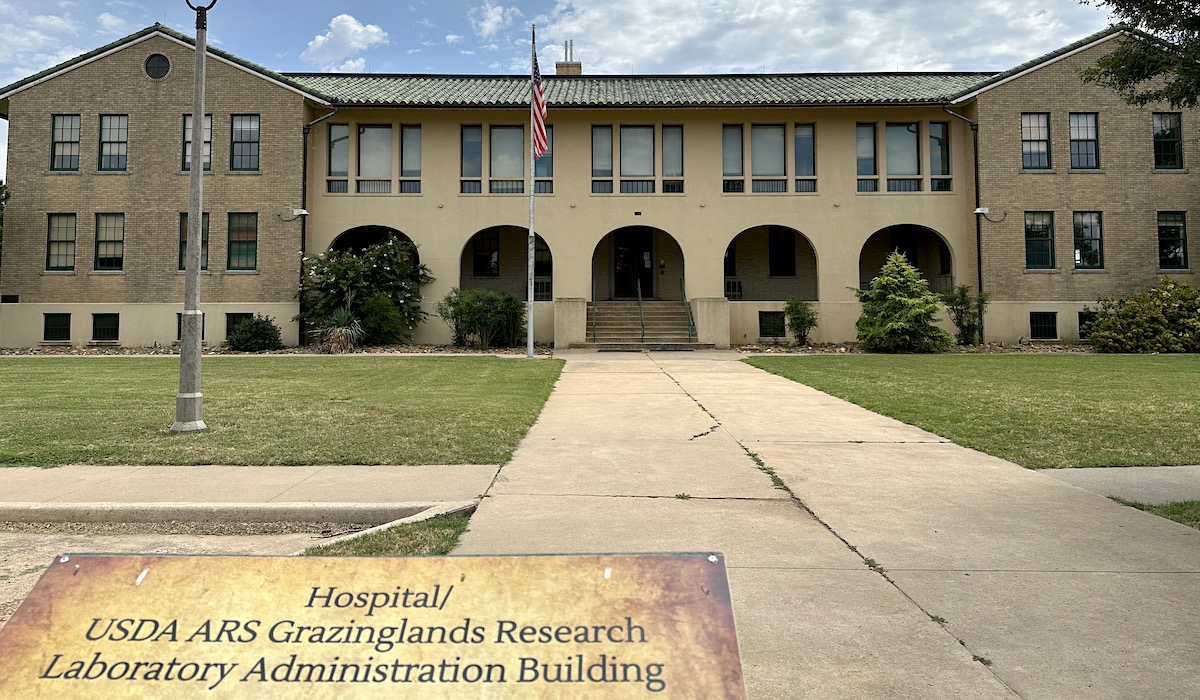
The Fort Reno dispute, however, has been thick for decades. The disagreement centers on roughly 6,700 acres of land west of Oklahoma City that was once part of the Cheyenne and Arapaho Reservation. It later formed a U.S. Army post and is now largely administered by the U.S. Department of Agriculture as the Oklahoma and Central Plains Agricultural Research Center. Tribal leaders argue they were never compensated for the loss of the land and that it should have reverted to them when the Army stopped using it in 1948.
Unlike many federal land disputes, there is no active piece of legislation pending to transfer Fort Reno to the tribe. Instead, the recurring legislative action from Lucas has been the opposite: Language has been inserted into farm bill-related legislation to prevent USDA from disposing of the Oklahoma and Central Plains Agricultural Research Center property.
Tribal leaders say that matters because it keeps the status quo in place while the underlying disagreement remains unresolved.
Members of the House Agriculture Committee and its staff have defended the restriction as necessary to protect federally funded agricultural research at the site. A committee aide said the center’s work “cannot be replicated anywhere else in the world” and that legislation will continue to support the facilities and the “specific requirements” needed for Agricultural Research Service activities.
USDA officials did not respond to requests for comment.
A reservation turned research center

Fort Reno sits on land that was once part of the Cheyenne and Arapaho Reservation, established in western Indian Territory after the Medicine Lodge Treaty of 1867. In 1869, President Ulysses S. Grant issued an executive order formally creating the reservation after tribal leaders discovered that the land they had been directed to occupy did not match what they believed had been promised in treaty negotiations.
Fourteen years later, President Chester A. Arthur set aside 9,493 acres of that reservation as the Fort Reno military reservation.
The U.S. Army used the site for decades, most prominently as a remount station that bred and trained horses for the cavalry. Fort Reno later became associated with African American “Buffalo Soldier” units stationed in the West.
After the Army’s frontier era, Fort Reno shifted missions and became one of the Army’s quartermaster remount stations. It served as a hub for breeding, training and shipping horses and mules, including during World Wars I and II.
The Army’s reliance on animal transport declined as mechanization replaced horses, but Fort Reno continued remount activity into the mid-20th century before Congress transferred the property to the USDA in 1948.
That transfer turned the former military reservation into an agricultural research facility focused on grazing systems, wheat pasture and livestock production. For a time in the late 20th and early 21st centuries, it housed a baboon breeding program.
Before that shift, Congress had already carved out part of the reservation for another federal purpose. In 1937, land from the former Fort Reno reservation was transferred to the Department of Justice for construction of what is now the Federal Correctional Institution at El Reno.
Today, the prison complex occupies only a small portion of the land assigned to it, with the remainder historically used for agricultural operations.
Supporters of the research center argue the facility plays a unique role in studying grazing systems and wheat pasture livestock production in the Southern Plains. Earlier federal reviews noted that the El Reno laboratory offered capabilities that could not easily be replicated at other Agricultural Research Service sites.
A long-running claim

Federal and tribal officials have debated the status of the Fort Reno lands repeatedly for decades.
In 1949, Oklahoma Congressman Toby Morris introduced legislation that would have returned roughly 6,900 acres of the property to the Cheyenne and Arapaho Tribes after the Army vacated the site. The proposal passed the House in 1952 but stalled in the Senate.
During congressional hearings on the bill, a 93-year-old Cheyenne man testified that tribal members had long believed the land would be returned once the military no longer needed it.
The tribes later pursued compensation through the Indian Claims Commission, which Congress created to hear certain tribal claims against the United States and award monetary settlements where appropriate.
In his testimony submitted to Congress this week, Wassana argued that prior compensation payments did not include the Fort Reno tract, noting that while the tribes received settlements for other reservation lands, “this payment did NOT include” the acreage set aside for military and later federal use.
“Returning Fort Reno to the Cheyenne and Arapaho Tribes is a concrete, lawful and moral step Congress can take to repair historical wrongs, restore tribal stewardship of ancestral lands and strengthen cultural and economic ties across Oklahoma,” Wassana wrote.
In 1965, the federal government and the tribes reached a $15 million settlement for lands ceded in 1891. However, the Indian Claims Commission’s jurisdiction covered claims only through 1946, and Fort Reno was not transferred to the U.S. Department of Agriculture until 1948.
Some federal legal analyses later interpreted that settlement as resolving claims related to Fort Reno. Wassana and other tribal advocates have argued the site was not fully addressed in the claims process and should still be eligible for return.
At the center of the tribes’ argument is what they describe as a two-track payment history that is often collapsed into a single claim that the federal government “already paid” for the land.
The first payment dates to treaty-era agreements tied to reservation land cessions in the late 19th century. The second came through the Indian Claims Commission process in the mid-20th century.
In an interview, Wassana said questions about the scope of those settlements remain unresolved.
“I’m hearing about a discrepancy of about 10,000 acres,” he said, suggesting that historical accounting may not have fully reflected land carved out and retained for federal purposes.
The acreage matters because it roughly matches the size of Fort Reno’s historic military reservation in its broader footprint, including areas now administered by USDA and, separately, by the Department of Justice for the prison complex.
Tribal advocates argue that if the government’s historical accounting treated only a subset of the reservation acreage as eligible for compensation, then no settlement has been reached for the remaining land.
Land dispute tied to farm bill cycle

The dispute resurfaced in the early 2000s when Congress inserted language into the 2008 farm bill prohibiting USDA from disposing of the Fort Reno research property.
Lawmakers at the time said the restriction was intended to preserve the facility and prevent the loss of agricultural research capacity.
Since then, Congress has repeatedly extended the restriction through appropriations measures and other legislation.
The latest extension was attached to the American Relief Act of 2025, a disaster relief measure providing $16 billion to farmers and ranchers for losses during the two prior years. That legislation extended the prohibition through Sept. 30, 2025.
RELATED
‘Held hostage’: Congress blocks Fort Reno return through September by Tristan Loveless

The draft language in the current farm bill would remove the final expiration date that had previously required Congress to revisit the issue every few years.
By striking that sunset clause, the House’s proposed legislation would convert what had been a temporary prohibition into a permanent restriction on transferring the land.
For congressional staff, the key fact is that federal law now repeatedly directs USDA not to treat the Fort Reno property as excess or surplus and not to convey or transfer it.
Tribal officials have described the recurring legislative language as a deliberate barrier and say they expect the issue to resurface again as lawmakers debate future farm bills.
Lucas has been the most visible federal lawmaker associated with the restrictive language in recent years. In the past, Lucas and his allies have characterized the land-transfer question as settled by prior compensation and emphasized the federal research mission at the El Reno facility.
What happens next is less a single decision point than a recurring legislative loop.
The 2018 Farm Bill expired in 2023 and has been kept alive through extensions, creating repeated vehicles for lawmakers to continue — or revise — riders affecting Fort Reno.
If the House’s current language remains in the final legislation, the prohibition on transferring the property would remain in federal law indefinitely unless Congress later voted to remove it.
Tribal leaders say they will continue pressing their claim as the next farm bill moves forward.
Wassana also pointed to potential economic incentives if the land were ever returned, including possible leasing and energy development.
Oil and gas production exists in the surrounding area, he said, and it is “more than likely” the land has reserves that could benefit the tribes — though he cautioned that would require further evaluation.
For now, the dispute remains a collision of timelines: a 19th-century reservation boundary, a 20th-century patchwork of federal uses and a 21st-century legislative process that keeps renewing a legal barrier without resolving the underlying disagreement.
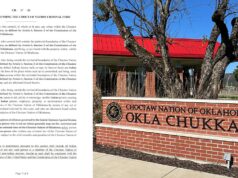
Read Gov. Reggie Wassana’s full written testimony