
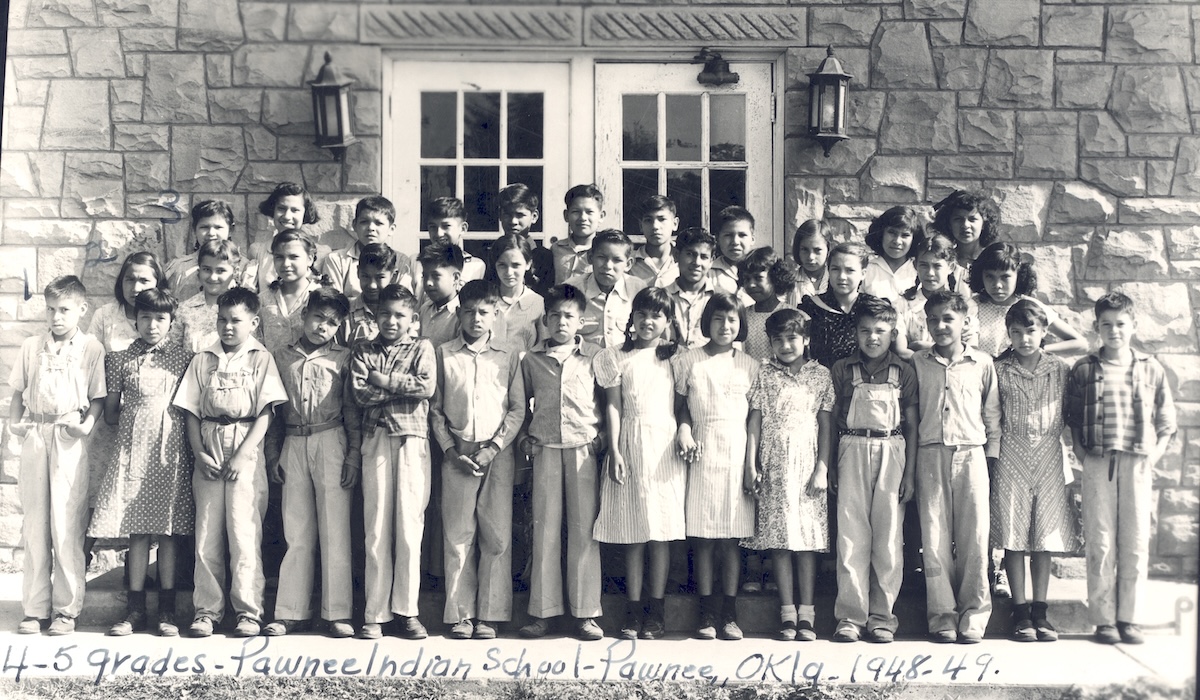
WASHINGTON — Oklahoma has been home to at least 76 Indian boarding schools, more than any other state in the nation. Now, those schools are at the center of a new bipartisan push in Washington to uncover decades of hidden tribal history — history that has been long withheld by religious institutions and the federal government.
H.R. 7325, titled the “Truth and Healing Commission on Indian Boarding School Policies Act of 2026,” has been reintroduced to the U.S. House by Rep. Tom Cole (R-OK4) and Rep. Sharice Davids (D-KS3), the main sponsors of the legislation. According to Cole, the bill aims to form an official commission to investigate past federal actions that forcibly enrolled nearly 86 percent of Indigenous school-age children into the boarding school system.
“For years, Indian boarding schools forcibly removed Native children from their families, stripped them of their heritage, and, in many cases, took their lives,” Cole said in a press release. “Yet, for far too long, little has been known about these Indian boarding schools, and these stories have been kept in the shadows. This silence cannot go on. We must bring light to this dark chapter in our nation’s history.”
Davids, whose grandparents survived the boarding school system, emphasized that the trauma is not a piece of the past, but a living force in tribal communities.
“I would not be here without the resilience of my ancestors and those who came before me — including my grandparents, who survived federal Indian boarding schools,” Davids said in the release. “Their experiences are not distant history. They shape our families and communities today. Establishing a Truth and Healing Commission would bring survivors, experts, federal partners and tribal leaders together to fully understand what happened to our relatives and to take meaningful steps toward a more honest and hopeful future.”
This story was reported by Gaylord News, a Washington reporting project of the Gaylord College of Journalism and Mass Communication at the University of Oklahoma.
While the bill seeks momentum as 2026 begins, it follows years of legislative difficulties, primarily centered on the investigative ability to gather evidence.
Previous iterations of the bill, such as 2021’s H.R. 5444, faced opposition over the inclusion of subpoena power. Opponents in the past have argued that granting such authority would make the commission adversarial rather than healing.
At this point, researchers have located fewer than 40 percent of boarding school records from the hundreds of federal, state, and religious institutions, according to the National Native American Boarding School Healing Coalition.
In Oklahoma, many boarding schools were run by religious organizations that received federal funding, and thousands of pages of student rosters and health reports remain behind the closed doors of private entities that are not subject to standard federal Freedom of Information Act requests.
Advocates like those with the National Native American Boarding School Healing Coalition insist that, without the legislation filed by Cole and Davids, the truth remains trapped in churches and private archives. The coalition took to social media to release a statement in support of the bill.
“This critical legislation acknowledges the devastating legacy of the federal Indian boarding school era and charts a path toward truth, justice and healing for Native peoples and all Americans,” the group’s post said. “For more than a century, government-funded and church-run boarding schools sought to erase Indigenous identities, languages and cultures — leaving generational trauma that continues to this day.”
Cherokee Nation Principal Chief Chuck Hoskin Jr. has been a consistent supporter of federal transparency on the topic, recently linking the need for historical honesty to the defense of tribal sovereignty.
“In the Cherokee Nation, our advocacy for our citizens has always been about restoration, accountability and looking out for one another as Cherokees,” Hoskin said.
RELATED
‘We need to tell what happened’: Indian boarding school survivors speak in Anadarko by Tres Savage
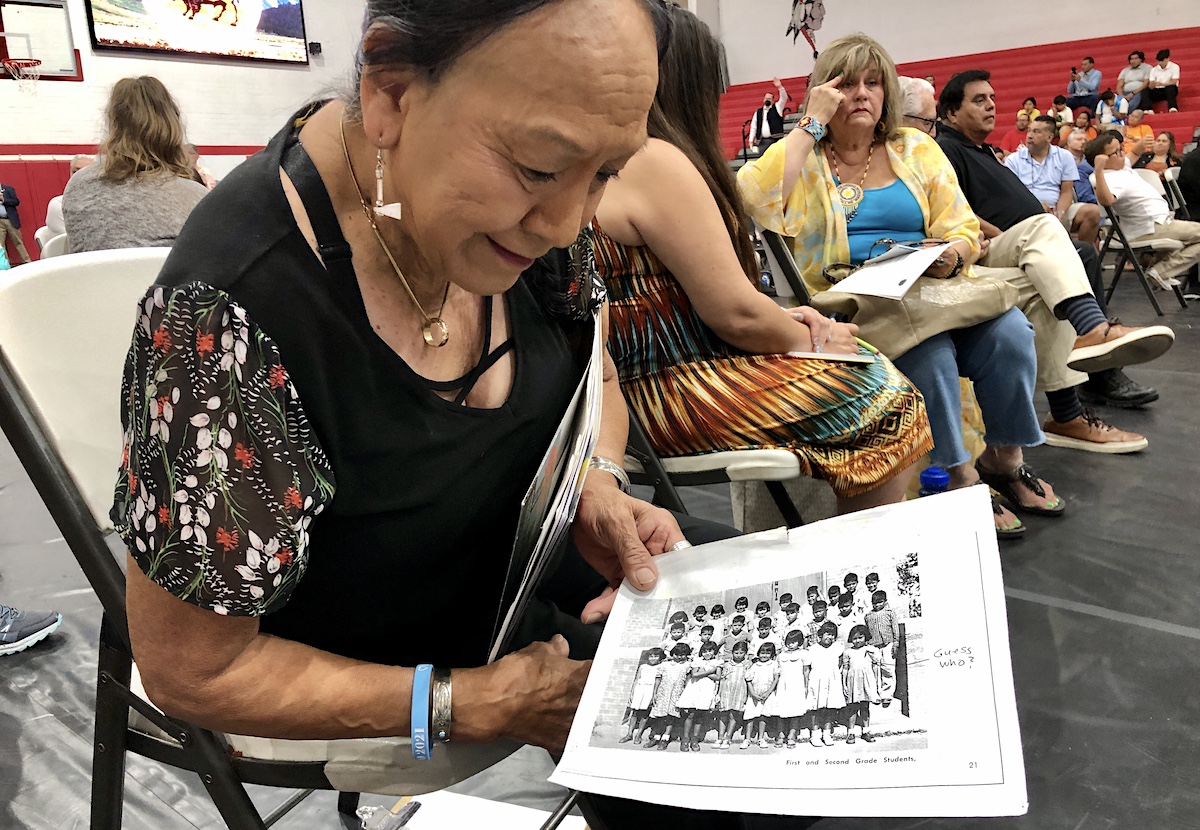
The proposed commission would have a six-year timeline to locate and identify marked and unmarked burial sites. In Oklahoma, at least 50 burial sites have already been identified, with many more expected as research continues. The commission would be given subpoena power under the new bill, a component designed to overcome the legislative blockades that have prevented tribal citizens from identifying where their family members were buried.
The legislation calls for a possible $90 million in funding across all 12 Bureau of Indian Affairs regions. The funding is meant to guarantee researchers have the resources to gain access to the estimated 100 million pages of documents that have yet to be uncovered.
Two boarding schools, Riverside Indian School in Anadarko and Sequoyah High School in Tahlequah, continue to operate in Oklahoma today, tracing their roots back to the 19th century federal system. Today, those schools emphasize self-determination and cultural preservation, distinctly different priorities compared to prior iterations.
In Oklahoma, where the boarding school system was most prevalent, the proposed commission aims to obtain all records surrounding the institutions and to provide a formal record on the impact the schools had on tribal nations, as well as to their citizens. H.R. 7325 was referred this month to the House Committee on Education and the Workforce, along with the Committee on Natural Resources.