


With data centers already in Oklahoma — and more on the way — legislation intended to protect residential ratepayers from bearing the brunt of infrastructure costs for large-load electric use is sailing through the House of Representatives with bipartisan support.
HB 2992, the Data Center Consumer Ratepayer Protection Act of 2026, aims to shield families and small businesses from higher utility bills tied to new data center infrastructure. According to Cleanview, a software platform that tracks clean energy trends and projects, Oklahoma, based on most recent information, has five operating data centers with 18 megawatts. There are 10 planned projects that would add 1,700 megawatts of additional capacity, according to Cleanview’s project tracker.
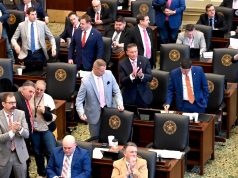
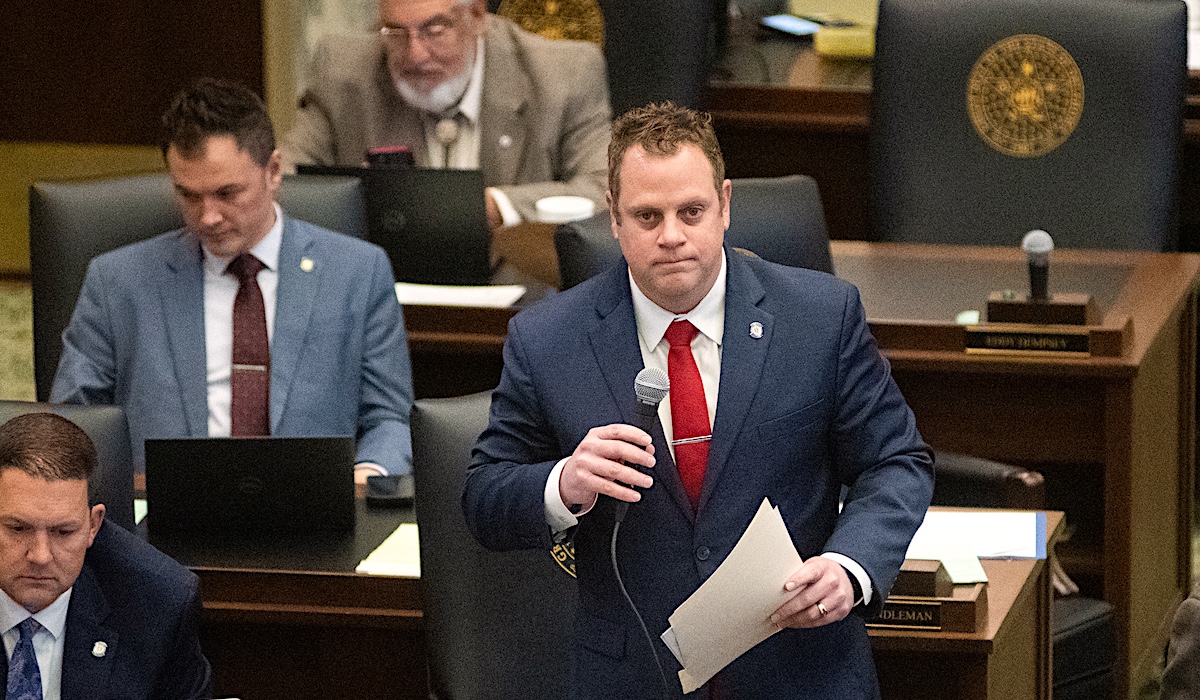
Authored by Rep. Brad Boles, HB 2992 is listed second on today’s House floor agenda after winning unanimous approval in two committees earlier this session. The House Energy and Natural Resources Oversight Committee, which Boles chairs, voted 14-0 to advance the bill March 4. Last month, it won 7-0 approval from the House Utilities Policy Committee.
“I’m very encouraged to see this legislation move forward with such strong support,” Boles, who is campaigning for a seat on the Oklahoma Corporation Commission, said in a March 5 press release. “As Oklahoma continues to grow and attract new industry, we have to make sure the cost of that growth does not fall on hardworking families and small businesses. This bill is about fairness and making sure Oklahomans are not forced to subsidize the infrastructure needs of large data centers.”

HB 2992 would set guidelines for how electric suppliers and regulators address the rising energy demands of large data centers, cryptocurrency mining operations and artificial intelligence facilities. The bill defines “large load customers” as new facilities adding 75 megawatts or more of grid demand and clarifies that residential, commercial and traditional industrial customers are not included in that classification.
“Any applicable governing body responsible for reviewing electric supplier rates shall ensure that residential, commercial and industrial customers are protected from paying unjust rates resulting directly from electric service to large load customers,” the bill reads. “The applicable governing body shall ensure that all rates are fair, just and reasonable, and costs and revenues are assigned and allocated among customers in accordance with cost causation principles.”
HB 2992 also requires all electric suppliers to establish and maintain separate terms, conditions and tariffs for large-load customers that “shall include credit requirements and any other measures necessary to ensure that such customers reimburse the utility for all costs fairly allocated to them (…) including costs incurred to directly serve the customer that may remain unrecovered if the customer departs the system or materially reduces load.”
Rep. Amanda Clinton, who initially sponsored similar legislation, has now co-authored Boles’ bill, something House Minority Leader Cyndi Munson said she also intends to do.
After an interim study last fall on data centers and their impact on Oklahoma resources, Clinton (D-Tulsa) previously authored HB 3392, which passed the House Utilities Committee unanimously, 9–0, earlier this session. That bill directed the Oklahoma Corporation Commission to examine the impact of large-load electric customers on the electric grid and residential ratepayers.
Clinton said the decision to consolidate efforts around Boles’ HB 2992 reflects growing bipartisan agreement that Oklahoma must proactively address the energy demands of large industrial developments while protecting everyday consumers.
“As data centers and other energy-intensive projects expand in Oklahoma, we must ensure that working families and small businesses are not left paying for infrastructure built to support billion-dollar companies,” Clinton said in a March 9 press release. “I’ve raised this issue for more than a year and did my due diligence by hosting a legislative study on the topic last fall. Since then, many important conversations have happened on both sides of the aisle, culminating in my authoring HB 3392, and my colleagues introducing measures as well. I’m grateful this issue has been elevated and gained bipartisan momentum, so I’m proud to consolidate efforts with Rep. Boles and support HB 2992.”
‘Put proper ratepayer protections in place’

Munson (D-OKC) said she is concerned about the growing number of data centers and large manufacturing operations that are being planned for Oklahoma.
To help address the issue, legislators last year passed SB 480, the “behind the meter” bill which allows companies to build off-the-grid power plants to support their facilities. Supporters say the measure is spurring economic growth by easing energy burdens on utilities and allowing for large-scale development projects, such as data centers and the massive aluminum smelter announced last year in the Inola area.
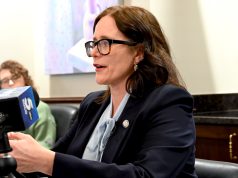
“The reality is they’re here, they’re coming, so we have to put some policies in place to make sure they don’t exploit our natural resources — especially water — (and) don’t exploit people and consumers so those costs don’t fall on us,” Munson said during a March 12 press availability.
Munson said she plans to join Clinton and sign on as a co-author on HB 2992.
“I’m very grateful to Rep. Boles who has opened the conversation for us to work together,” Munson said. “[Clinton] did sign on. I will likely sign on to support House Bill 2992 as well. I think he’s moving in the right direction. I think he had some more — he was going a little bit further, too, than her legislation. But we want to make sure, especially around water and our electricity bills, that (they) don’t use all of our water and [build] out their own infrastructure. (…) I think that’s important, too — not putting that on taxpayers.”
Senate Minority Leader Julia Kirt said March 12 that while she had yet to read HB 2992 thoroughly, she supports Boles’ concept.
“I think his intention sounded good to try to make sure that, you know, regular ratepayers are not paying for big industrials,” said Kirt (D-OKC). “That makes total sense.”
Kirt said it is important for the state to consider all types of energy sources to handle the increased electricity load required by data centers.
“On our side, I think we continue to prioritize natural gas over other energy sources, and we have to make sure that we’re not holding back wind and solar development, because that’s another big issue,” she said. “If we’re talking about getting to the volume we need to serve more data centers, we know we need a ton more (generation).”
Boles said he appreciates the bipartisan support behind this bill, saying legislators understand how important this issue is for Oklahomans, many of whom have attended public meetings and rallies about the impacts posed by potential data center projects.
“With more than a dozen potential data centers considering our state, we must make sure everyday Oklahomans are not left paying higher electric bills because of increased demand,” Boles said in Clinton’s March 9 press release. “This is about protecting ratepayers and ensuring large energy users pay for the infrastructure needed to support their operations instead of shifting those costs onto families and small businesses. We have a duty to put proper ratepayer protections in place. Oklahoma families should not be expected to finance major system upgrades required for high-demand users. Those costs should rest with the companies driving the need.”
Clinton said joining Boles’ legislation allows lawmakers to advance a unified approach to protecting ratepayers.
“This is a complex issue that requires thoughtful policy and cooperation across party lines,” Clinton said. “Rep. Boles and I share the same goal of ensuring Oklahoma families are not subsidizing massive new energy demands from large corporate customers, and working together creates a stronger opportunity to move meaningful protections forward. I’m proud to work with Rep. Boles to protect regular Oklahomans.”