

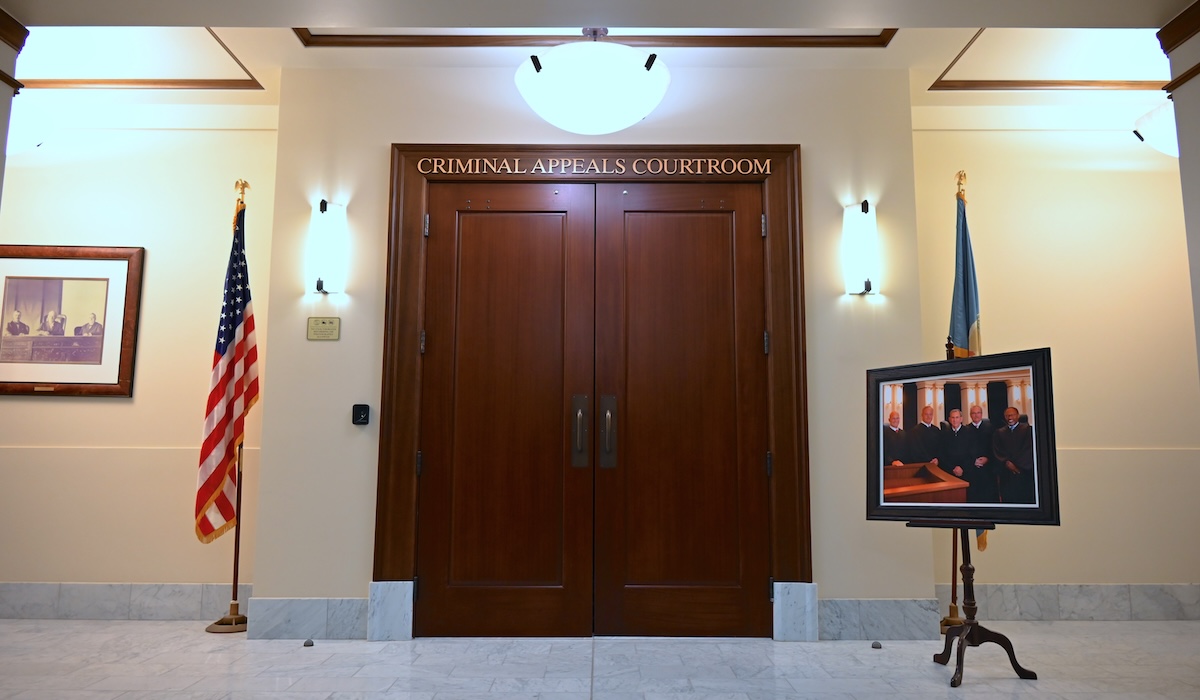

Be careful carrying lots of cash in your trunk — the Oklahoma Court of Criminal Appeals has ruled circumstantial evidence “deemed drug courier profile evidence” is enough to convict defendants of acquiring proceeds from drug activity after a man was pulled over in Craig County carrying $50,000.
Prosecutors had offered no evidence the man was carrying the money for illicit activities beyond its quantity and style of storage — most of it vacuum-sealed within a tricycle’s box in his vehicle’s trunk — but the OCCA affirmed his conviction after officers testified such practices were consistent with the drug trade.
On the other hand, the OCCA recently vacated the sentence of a Payne County man who pleaded guilty without understanding his rights and the consequences of his plea.
Read about those decisions, along with a cockfighting arrest in the Cherokee Nation, Title IX violation accusations in Talihina, the Ethics Commission’s decision to publicize a senator’s mileage reimbursement logs and more in this legal roundup.
OCCA upholds ‘acquiring proceeds from drug activity’ conviction based on circumstantial evidence
A 4-1 majority of the Oklahoma Court of Criminal Appeals affirmed Jesus Efren Pena’s conviction for acquiring proceeds from drug activity, finding a jury could conclude Pena’s guilt beyond a reasonable doubt based on the circumstantial evidence presented at trial.
Pena was driving a rental car on Interstate 44 in Craig County on Aug. 31, 2022, when he was stopped by Oklahoma Highway Patrol Trooper Caleb Cole. After a drug dog alerted on the car, Pena admitted to having two marijuana pre-rolls, but he denied having anything else suspicious in the vehicle — including large quantities of currency.
A subsequent search found the two pre-rolls and approximately $50,000 in cash. Of the cash, $2,000 was inside a backpack in the front of the vehicle while more than $48,000 was “packaged in seven vacuum-sealed bags in the trunk (…) hidden in a box housing a child’s battery powered tricycle.”
Pena was arrested and charged with possession of marijuana and acquiring proceeds from drug activity. At trial, his defense centered on the fact police had no proof the money was connected to the drug trade. Prosecutors put Cole and another officer who assisted with the arrest on the stand, and they testified that the way Pena transported the money was consistent with the drug trade’s standard practices. They also called Oklahoma Bureau of Narcotics agent Branson Perry, who did not work the case, to testify whether he thought the evidence at trial matched drug trade practices.
Convicted of acquiring proceeds from drug activity but acquitted on the marijuana possession charge, Pena was sentenced to eight years imprisonment and issued a $50,000 fine. Pena appealed, again arguing prosecutors failed to prove the money was connected to the drug trade. While he never identified the source of the money, Pena’s attorney noted he has a prior conviction for ammunition smuggling from 2012.
Judge Scott Rowland, writing for the majority Feb. 19, argued this type of evidence was required by the circumstances of drug trafficking cases.
“Unlike the cases cited by Pena, Pena’s case does not involve illegal drugs. Instead, his case involves U.S. currency which is not illegal to possess unless it is derived from or intended to be used to facilitate a drug crime,” Rowland wrote. “Expert testimony is required to even establish that the currency is contraband, unlike the case of heroin or methamphetamine which is known by most lay persons to be illegal contraband. The prosecution in the rare case may be able to present a witness from either the money’s point of origin or its intended destination who will admit that it came from unlawful activity, but most prosecutions under this statute will necessarily involve testimony which may be deemed drug courier profile evidence.”
While the majority did not find a reason to reverse Pena’s conviction, they did caution that the testimony given by OBNDD’s Perry was “problematic.”
“His testimony, for all intents and purposes, told the jury what conclusion to reach, not because he gave expert testimony about what facts one might expect to find in the investigation of interstate bulk currency smuggling, but because he sat through the entire trial, heard the entirety of the evidence, and then combed through each bit of it stating that each was consistent with drug trafficking,” Rowland wrote. “His testimony crossed the line of proper expert opinion testimony outlined in Romano (v. State), and we caution prosecutors to exercise great care in keeping expert testimony within the proper confines of the Evidence Code.”
Vice Presiding Judge William Musseman dissented by arguing Perry’s testimony constituted a reversible error, while Judge David Lewis wrote separately to argue Perry’s testimony was properly admitted.
10th Circuit affirms federal life sentence for Patrick Murphy
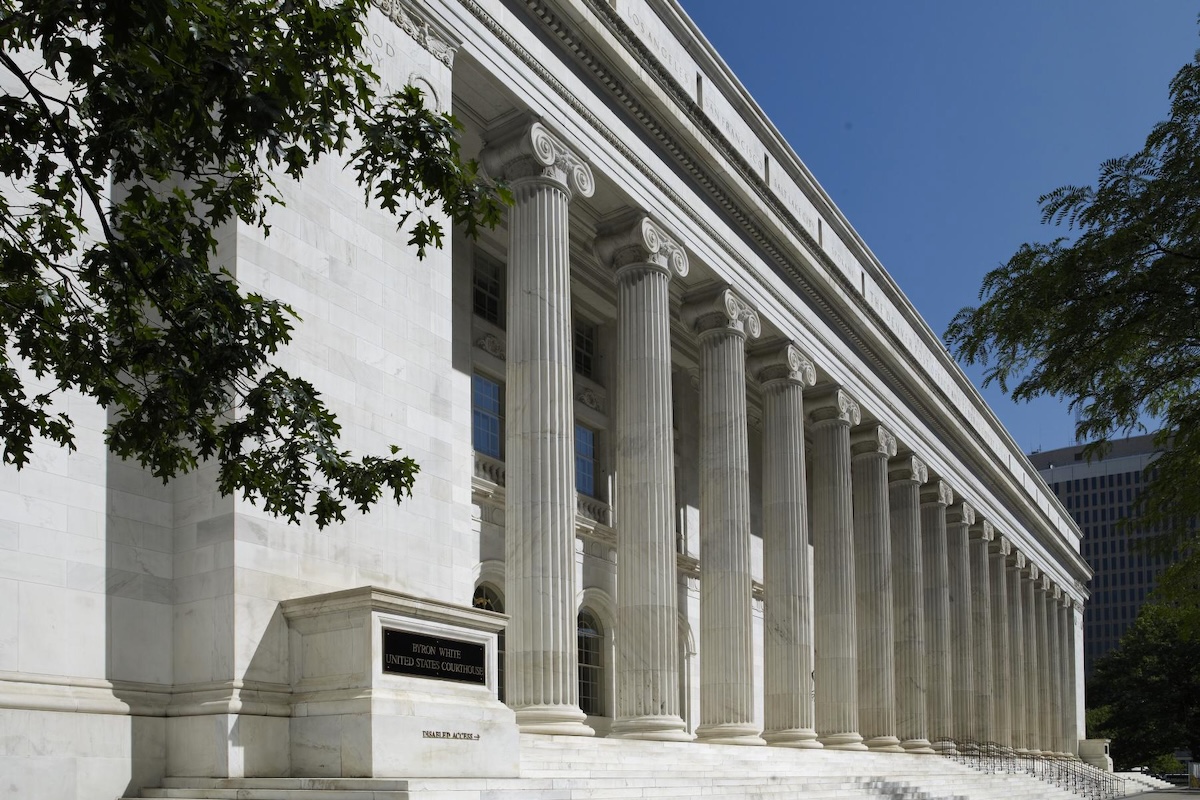
On Jan. 26, the 10th Circuit Court of Appeals affirmed the federal life sentence of Patrick Murphy, a Muscogee Nation citizen, for the 1999 murder of George Jacobs. Murphy — whose prior appeal to the 10th Circuit cleared the way for the U.S. Supreme Court’s McGirt v. Oklahoma decision — had argued his life sentence was inappropriate for his conviction of second degree murder.
According to the 10th Circuit’s 2017 summary of the case, Murphy had been in a relationship with Patsy Jacobs, who had a child with George Jacobs. On Aug. 28, 1999, Murphy was driving near Henryetta with Billy Long and Kevin King when he passed Mark Sumka driving with George Jacobs in his backseat. Murphy and his cohorts ran Sumka off the road and began beating Jacobs as Sumka ran away.
While Sumka was away, the three men cut Jacobs with a knife, removed his genitals, placed them in his mouth and left him in a ditch near Vernon Road as he bled to death. Sumka returned a few minutes later, was punched by King and was told he would be killed if he “said anything.” He was then taken with the men as they attempted to kill Jacobs’ son, but they were stopped by his mother before the child was harmed.
The 10th Circuit panel found the heinous details of Murphy’s crime justified the upward departure in his sentencing.
“Murphy initially suggests that his sentence is substantively unreasonable because it is the same sentence he would have received had the jury convicted him of premediated first-degree murder. But the district court did not base its sentencing decision on premeditation; indeed, it never used that word,” Judge Nancy Moritz wrote. “Instead, it focused on the particularly gruesome and cruel circumstances of Murphy’s offense.”
Murphy was previously sentenced to death in Oklahoma’s state courts, but his state conviction was overturned by the 10th Circuit Court of Appeals in 2017. Murphy was then tried, convicted and sentenced in federal court. Long pleaded guilty, was sentenced to life in prison and died in prison April 24, 2017. King — who was 15 at the time of the murder — pleaded guilty, was sentenced to 45 years in prison, and died in prison on May 12, 2016.
Ethics Commission publishes Sen. Shane Jett’s mileage accounts

While an Ethics Commission into an anonymous complaint accusing Sen. Shane Jett of duplicating mileage reimbursements yielded no substantiated evidence of misconduct, the commission voted to release Jett’s mileage accounts after finding his publicly available reports insufficient.
Ethics Commission executive director Lee Anne Bruce Boone released a statement alongside the mileage reports explaining the commission decided it would be most efficient simply to release the documents they collected over the course of the investigation.
“During the review, the commission identified deficiencies in the level of detail contained in the campaign’s public reports regarding mileage reimbursements. Ethics rules require expenditures to be reported with sufficient specificity to allow the public to evaluate the purpose and basis of the expense,” Bruce Boone said. “Amendments and supplemental materials were submitted; however, the filings as amended did not result in clear, publicly accessible disclosure of the required details.”
Bruce Boone’s statement did not list any specific rule Jett broke, and Jett will not pay a fine or face other penalties in the case. Instead, the commission found Jett had not “fully” met the state’s transparency standards.
“Under the Ethics rules, compliance is measured not only by whether information is provided to the commission, but whether it is reported in a manner that ensures meaningful public transparency,” Bruce Boone said. “In this instance, that standard was not fully met.”
While most of the trip descriptions in Jett’s mileage reports are brief — often featuring only one word — they show many of the trips to visit community organizations and political groups typical to legislators. For example, Jett made repeated trips to the Oklahoma Farm Bureau, Maud Tea Party and OCPAC. Some of his trips seem to describe visits to fellow officials, such as an entry labeled “Kerbs Coney,” likely referring to a trip to a Coney Island hot dog stand in downtown Shawnee owned by Rep. Dell Kerbs (R-Shawnee).
Former State Superintendent of Public Instruction Ryan Walters is seemingly mentioned four times in Jett’s logs for trips described as “Ryan Walters Shawnee,” “R.Walters CoffeNCrafts,” “OCPAC/General/Walters” and “Tornado Walters.” The logs also include reimbursements for “Deevers watch party” and “Dahm Coffee N Craft,” apparently referring to Sen. Dusty Deevers (R-Elgin) and former Oklahoma Republican Party Chairman and Sen. Nathan Dahm (R-Broken Arrow).
Trips to “Donkey Dairy” were mentioned three times, along with one trip to “Donkey Dinner.” There is also a listed trip to “OKSS Daddy Daughter.”
In a statement to NonDoc, Jett thanked the Ethics Commission for its work and reiterated that the original claims against him were not substantiated. Jett noted the timing of the Ethics Commission’s notification that his mileage reports were under review, which he said came one day after he questioned a Senate leader’s impartiality in a vote to remove the Oklahoma Department of Mental Health and Substance Abuse Services’ commissioner on the final night of the 2025 legislative session.
“On May 30, 2025, the Oklahoma Ethics Commission notified me of an anonymous allegation concerning my campaign finance reports. I promptly submitted my mileage logs for review. During this process, I identified minor data entry duplications and disclosed them to the commission. We corrected the duplications and dates, updated the reports, and provided all requested information,” Jett said. “We appreciate the commission’s work and mission to provide transparency and accountability for Oklahoma voters, and are pleased the allegations were not substantiated.”
Title IX lawsuit heads back to district court after 10th Circuit review

(Update: Hours after the publication of this article, the 10th Circuit Court of Appeals released a ruling, which was incorporated into the section below at 3 p.m. Wednesday, March 4.)
On Wednesday, the 10th Circuit Court of Appeals published a 56-page interlocutory ruling in a lawsuit filed against Talihina Public Schools, district employees and board members. Asked to review eight separate issues raised on appeal, the court upheld the denial of motions to dismiss on some claims, while reversing and remanding others back to the U.S. District Court for the Eastern District of Oklahoma.
The case blends complex allegations of unconstitutional sex segregation, teacher harassment, retaliation and a breakdown in Title IX protections.
Amber and Jonathon Stepp sued the district individually and on behalf of their son, identified in court filings as now being 13 years old. They allege district officials violated his civil rights in 2022 by separating fifth graders into all-boys and all-girls classrooms and by failing to protect him after a teacher — Kevin McClain — allegedly humiliated him in front of classmates.
Asked to review District Court Magistrate Judge Jason Robertson’s denial of various motions to dismiss from the individual defendants, the 10th Circuit panel:
- reversed the district court’s denial of the motion to dismiss related to count five’s procedural due process claims, effectively dismissing that claim;
- affirmed the district court’s denial of the motion to dismiss related to count five’s equal protection claims, allowing that claim to continue;
- affirmed the district court’s denial of the motion to dismiss related to count six’s retaliation claim against Talihina Elementary School principal Kathy Anderson and Title IX officer Bill Blair, allowing that claim to continue;
- reversed the district court’s denial of the motion to dismiss related to count six’s retaliation claim against Title IX officer Tracy Bryant, effectively dismissing that claim;
- dismissed for lack of jurisdiction the motion to dismiss related to count seven’s conspiracy claim, allowing that claim to continue;
- reversed the district court’s denial of the motion to dismiss related to count nine’s retaliation claim alleged against Talihina Public Schools Superintendent Jason Lockhart and the Talihina Board of Education members, effectively dismissed that claim;
- reversed the district court’s denial of McClain’s motion to dismiss related to count four’s substantive due process claim, effectively dismissing that claim; and
- affirmed the district court’s denial of McClain’s motion to dismiss related to count four’s equal protection claim, allowing that claim to continue.
The suit lists 13 defendants, including the school district, Lockhart, school board members and other employees of the district like McClain, who was accused of singling out the Stepps’ son, yelling at him and calling him “queer.”
According to the lawsuit, Talihina Elementary School began the 2022 academic year with two single-sex fifth-grade classes — boys taught by a male teacher, McClain, and girls taught by a female teacher. The Stepps argue the arrangement relied on “offensive and outdated stereotypes” and violated federal protections, including those in Title IX.
In a written statement quoted in the lawsuit, McClain explained his support for the gender segregation setup.
“The school administration made the decision to separate the boys and girls into two different homerooms for this year and I would teach the boys,” McClain said. “I support this decision and believed that having the students in an all-boy setting would provide us the opportunity to instruct the students in proper behavior and I could have some frank conversations that could not take place in a boy/girl mixed setting.”
The complaint alleged the classroom environment quickly deteriorated, a claim the Stepps previously detailed to NonDoc in 2022. Within a matter of weeks, McClain allegedly yelled frequently and singled out the Stepps’ son for discipline.
The lawsuit describes incidents in which the child cried after being screamed at in front of classmates and claims McClain yelled so loudly on one occasion that the child’s siblings heard him from their own classrooms. The Stepps also allege McClain used homophobic slurs during class discussions, pointed at their son and said students must not draw male genitals because the child is “queer.” The Stepps allege that McClain, who lived in Texas but commuted to Oklahoma to teach, instructed boys to yell “fag alert” when they are touched in ways they did not like.
In April 2025, Robertson partially denied the defendants’ motions to dismiss, ruling against qualified immunity. Robertson’s ruling was appealed to the U.S. Court of Appeals for the 10th Circuit.
During oral arguments before a 10th Circuit panel, Adam Brightpole, who represents the school district and all other defendants except McClain, described the dispute as unusually complex. He said the appeal spans segregation, alleged remarks toward the Stepps’ son, the district’s Title IX response, changes to placement and retaliation claims.
“The important thing is that not every individual defendant in this case is alleged to have been involved in the same way or to the same degree every step along the way,” Brightpole said, urging judges not to “paint them with the same brush.”
For the Stepp family, attorney Blake Johnson countered by outlining the litany of issues at hand.
“This court should affirm the decision, because in 2022, no reasonable state actor would doubt that the Constitution prohibits the segregation of public school classrooms by sex, a teacher’s aggressive sexual harassment and gender bullying of an 11-year-old boy or a campaign of retaliation against parents who filed a Title IX complaint,” Johnson said.
Writing for the 10th Circuit panel, Judge Scott Matheson Jr. noted that Anderson blamed the Stepps’ son for the district having to reintegrate the fifth-grade classes by gender, and the judge referenced an altercation at a basketball game between the child’s father and Blair, who was also accused of making the child sit on the floor instead of at a desk once classes were integrated.
“‘Even without prior case law on point,’ school officials should be ‘on reasonable notice’ that punishing a fifth-grade student and publicly blaming the parents for ending sex-segregated classes because they complained about a teacher’s abusive treatment of their child is unconstitutional conduct.”
But in saying the due process claim for count five should have been dismissed, Matheson said the Stepps’ complaint failed to articulate an explanation of what due process their son should have been afforded before they withdrew him from school.
“They contend that ‘once [defendants] closed their Title IX ‘investigation,’ the only options available for [their child’s] education were to continue suffering sex- and gender-based abuse in McClain’s all-boys room (…) or to forego any meaningful educational opportunity at the free public school in his district,'” Matheson wrote. “But because [Talihina Elementary School] did not suspend or impose a ‘total exclusion’ on [the child], as happened in [Goss v. Lopez], the question is whether the alleged facts amounted to a procedural due process deprivation ‘of the right to attend school.’ (…) The SAC failed to identify what process should have been
afforded.”
Former Coal County undersheriff takes deferred sentence after agreeing to resign

A judge required former Coal County Undersheriff Jesse Yother to agree on the record that he would no longer work for the Coal County Sheriff’s Office from “hereafter” before accepting a plea agreement resolving criminal charges against him.
Yother was criminally indicted Nov. 21, 2025, on a felony count of intimidation of a witness and a misdemeanor count of obstructing an officer. His indictment was part of a larger investigation into now-suspended Coal County Sheriff Jason Smith and an alleged July 26, 2025, domestic dispute.
Court documents state Smith allegedly hit his wife and another man, while Yother was accused of preventing a Coalgate police officer from doing an investigation and telling a witness to change her statement.
During the Feb. 9 plea hearing, District Judge Mark Campbell questioned whether Yother’s separation from the Coal County Sheriff’s Department was a condition of the agreement. District Attorney Chuck Sullivan, who was appointed to handle the case in Coal County, said the parties had discussed Yother retiring as part of the deal, but he said that provision had not been formally included in the record.
Campbell said he would not accept the plea agreement without making clear on the record that Yother would no longer be employed by the Coal County Sheriff’s Office.
After placing Yother under oath, Campbell asked whether he understood the terms of the agreement. Yother said he did. However, when asked specifically whether he understood that he could no longer be employed by the sheriff’s office, Yother said he did not understand.
Campbell told Yother he would not accept the plea if he failed to agree to step down from his position. The judge then called a brief recess and instructed Yother’s attorney to confer with his client.
Following a five-minute recess, the hearing resumed, and Yother was again asked whether he understood the condition.
Yother asked whether his prohibition on employment applied only during the six-month deferred sentence or permanently.
Campbell responded, “hereafter,” indicating the restriction would extend beyond the period of his deferred sentence.
After hesitating for several moments, Yother said he agreed.
Campbell then accepted the plea agreement. Yother received a six-month unsupervised deferred sentence and was ordered to pay court costs. If he complies with the terms of his deferral, the conviction will not be formally entered at the end of the six-month period.
The removal trial for Smith is scheduled for April 27 at the Coal County Courthouse.
OCCA vacates guilty plea over lack of records
The Oklahoma Court of Criminal Appeals vacated a Payne County District Court order denying a request by Curtis Lane Sixkiller to withdraw his guilty plea for misdemeanor charges of malicious injury to property and resisting arrest. The appellate court remanded the case back to Associate District Judge Michael Kulling’s courtroom.
Sixkiller was accused of graffitiing a gas station in Cushing on Sept. 21, 2023, and charged with misdemeanor malicious injury to property a month later. He was arrested by Cushing police officer Carson Watts on Oct. 23 and charged with resisting arrest Oct. 25.
He pleaded guilty May 7, 2024, and was given a one-year suspended sentence after 120 days in jail. He was also required to pay $815 in restitution. He motioned to withdraw his plea May 15, 2024, and — over a year later — on June 3, 2025, the motion was denied.
Sixkiller appealed the district court’s decision, arguing his plea was not “voluntarily and intelligently entered,” because nowhere in the record were his rights and the consequences of a conviction explained to him. Attorney General Gentner Drummond’s office agreed.
“[Sixkiller] asserts that he must be allowed to withdraw his guilty pleas because this court cannot presume waiver of his constitutional rights from a silent record. The state agrees,” attorneys for the Attorney General’s Office wrote. “The record lacks an affirmative showing that petitioner’s guilty pleas were knowingly and voluntarily entered. As a result, this court should reverse the district court’s decision and allow petitioner to withdraw his guilty pleas.”
Presiding Judge Gary Lumpkin, writing for a unanimous court, ultimately agreed that Kulling’s order should be vacated because the record lacked required documentation.
“This court has held that “[t]he Uniform Plea of Guilty/Summary of Facts form set out in Section XIII (Form 13.10), Rules of the Court of Criminal Appeals, must be utilized for all pleas entered in the district courts of the state of Oklahoma,” Judge Lumpkin wrote. “Here, there was no Summary of Facts/Guilty Plea form filed in either case.”
Sixkiller is currently the subject of bench warrant for failing to attend his court hearings.
Former McIntosh County sheriff charged for cockfighting

Former McIntosh County Sheriff Jeff Coleman was charged with one count of felony cruelty to animals in Cherokee Nation District Court for allegedly hosting a cockfighting event on his property in Duchess Landing. A warrant for his arrest was issued by Presiding Judge Luke Barteaux, and court records do not currently indicate an arrest date for Coleman. His bond is set at $5,000. Coleman served as McIntosh County’s sheriff from 2001 to 2005.
The affidavit for arrest written by officer Bronson McNiel alleges Coleman hosted illegal cockfights on two occasions at a property he owned in rural McIntosh County. According to McNiel, video evidence of the cockfights was provided by Kevin Chambers of Animal Wellness Action, who voluntarily attends cockfights to record them for the purpose of providing evidence to the public, media and law enforcement agencies.
Chambers’ videos allegedly showed Coleman organizing and announcing the cockfights while also collecting money from participants, according to the affidavit. It also showed a cockfighting pit and participants handling cockfighting gaffs. The affidavit also describes dead chickens on the property, but it does not clarify if they were video recorded or personally observed by officers in a subsequent search.
While the initial arrest affidavit accused Coleman of “instigating or encouraging a cockfight” and “keeping place, equipment and facility for illegal cockfights,” he was ultimately charged with felony animal cruelty. Current House District 19 candidate Anthony DeVore and former Oklahoma Gamefowl Commission vice president Blake Pearce are listed as witnesses in the Cherokee Nation’s filings against Coleman. Their charges in state court for attending cockfights are pending.