


The Oklahoma Supreme Court on Monday declined to hear Gov. Kevin Stitt’s attempt to overturn an attorney general’s opinion regarding state enforcement of licensure requirements on Native American hunters in Indian Country, saying the issue will ultimately be resolved by an ongoing lawsuit in federal court.
Stitt, the Oklahoma Department of Wildlife Conservation, director Wade Free, and special counsel Russell Cochran asked the state’s highest court Jan. 27 to deem an opinion issued by Attorney General Gentner Drummond on Dec. 18 “advisory only’ and to issue a stay on the opinion’s enforcement.
In three separate concurring opinions, justices said the matter would be resolved by a November 2025 lawsuit filed in the Northern District of Oklahoma by the Choctaw, Chickasaw and Cherokee Nations against Stitt and other state officials.
“The federal court is not bound by the reasoning of the opinion and can reject the analysis of federal law on which the opinion relies,” Chief Justice Dustin Rowe wrote, while being joined by Justice M. John Kane IV. “Once the federal court resolves this question, its decision — grounded in federal law — will likewise settle the state question addressed in the opinion.”
Vice Chief Justice Dana Kuehn wrote in her opinion that any violation of the state’s wildlife code is a misdemeanor and that the Oklahoma Supreme Court “has no jurisdiction over criminal prosecutions.”
Justices Travis Jett and James Winchester had the lengthiest opinion, concurring that “we should not delve into the merits of this case.”
“Our decision to abstain from the merits is bolstered by the fact that Attorney General Opinion 2025-19 is merely advisory. ‘[N]o official or agency is bound by the attorney general’s view of a constitutional infirmity,'” Jett and Winchester said, before adding that the federal court “is primed to resolve the merits of the parties’ dispute with a fully developed factual record, which will inform whether Opinion 2025-19 is substantively correct.”
Drummond said in a Tuesday press release that the state court’s ruling constituted another rejection of Stitt’s “unlawful campaign against tribal citizens exercising their long-held rights.”
“The court would not be used as a tool to override settled federal law and decades of cooperative wildlife management,” Drummond said. “My position has never wavered: Federal law is clear, and it is my duty to uphold it.”
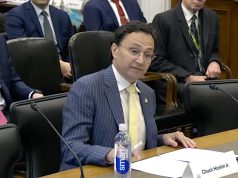
Cherokee Nation Principal Chief Chuck Hoskin Jr. issued a press release applauding the decision, stating it represents a rejection of Stitt’s “misguided attempts” to diminish tribal sovereignty.
“Today, the Oklahoma Supreme Court honored the sanctity of our treaties, paving the way for a future built on mutual respect, progress and justice,” Hoskin said.
Muscogee Nation Principal Chief David Hill shared a story from KOTV in Tulsa about the court’s decision with the quote, “Man….another L for the wrong side of history. And just in time for the crappie spawn! You love to see it!”
Hill’s Facebook post also included links to the tribe’s wildlife laws and its permitting application.
Follow @NonDocMedia on:
Facebook | X | Text or Email
Lawsuit, criminal cases remain pending
In their federal lawsuit, three of the state’s largest tribes have asked a judge to block the state from enforcing its hunting and fishing laws on tribal citizens within Indian Country reservation boundaries, which span most of eastern Oklahoma.
Named as defendants in the lawsuit were Free — ODWC’s director — as well as ODWC assistant director Nels Rodefeld, ODWC law enforcement chief Nathan Erdman, Stitt and Cochran, the special counsel Stitt appointed to prosecute wildlife tickets against tribal citizens in eastern Oklahoma.
The lawsuit asks the court to prohibit state officials from applying or threatening to apply state wildlife laws to tribal citizens exercising treaty rights, to those participating under the Five Tribes’ reciprocity agreement, and to other Native Americans regulated by the tribes. The suit also seeks an injunction preventing the state from interfering with tribal jurisdiction or initiating or continuing state court cases tied to these activities.
In response, state officials argued that tribal members “do not hold a special right to hunt and fish on fee lands free of State wildlife regulations, such as licensing requirements. And tribal members do not enjoy immunity from citation or prosecution in state courts for violation of the State’s wildlife laws and regulations.”
A trial date in the lawsuit has not been set, with both sides facing a March 27 deadline to submit any stipulations of fact or stipulations in the case.
The lawsuit came one month after a power struggle began between Drummond and Stitt when the Attorney General’s Office, in October 2025, took over and dismissed a misdemeanor citation filed against Choctaw Nation citizen Shawn Robertson for hunting on state land without a state license.
More than two weeks later, Stitt appointed Cochran as a special prosecutor to pursue wildlife crimes involving tribal citizens in eastern Oklahoma.
Cochran refiled cases against Robertson and Chickasaw Nation citizen Kodie Shepherd. Both cases remain active, but no new court dates have been scheduled following their initial appearances.