


As Oklahoma courts focused on their own dockets in March, court viewers across the nation were engrossed by the civil trial of Ohio-based rapper Afroman. Local media successfully petitioned for permission to livestream the trial, resulting in thousands of views on hours of footage around the country. While most Oklahoma courts contain surveillance cameras, media recording is generally prohibited in this state.
Several Adams County Sheriff’s Department officers had filed a civil lawsuit against the rapper for creating songs about them after a search by the department left his home damaged. Afroman wrote the ballad Will You Help Me Repair My Door about the officer’s damage to his home and Lemon Pound Cake, an ode to his mother’s dessert which was present in the home during the raid.
While Afroman’s trial may have taken place in Adams County, Ohio, at least one of his songs about the trial was recorded in Tulsa, according to the Church Studio’s Facebook page. Randy Walters is a Son of a Bitch, a diss track written about one of the deputies which largely consists of the title, joins the cadre of songs to come out of the Tulsa studio.
Meanwhile, decisions by additional local courts came down on the disestablishment of the Citizen Potawatomi Nation Reservation, the difference between “sexual relations” and “sexual intercourse,” as well as another look at Oklahoma’s riot statute. Find items about those topics — and education issues — in this legal roundup.
Court of Criminal Appeals distinguishes ‘sexual relations,’ ‘sexual intercourse’ under OK law
(Editor’s note: The following section includes discussion of child sexual abuse.)
The rules of statutory interpretations sometimes cause cases to appear odd to laymen, like the Oklahoma Court of Criminal Appeals’ decision in Steel v. Oklahoma which took a hard look at the differences between “sexual relations” and “sexual intercourse” under state criminal law.
The case stemmed from the conviction of John Anthony Steel for lewd or indecent proposal to a child under 16. Steel was sentenced to 10 years in prison for the crime after his granddaughter accused him of asking her “to watch pornography and masturbate with him.” At trial, Steel argued his granddaughter had approached him with “her hands in her pants, which made him uncomfortable” to which he claimed to say: “What, just because we’re alone you think we could do that together?” Both Steel and his granddaughter agreed she left shortly after the comments and the interaction was only verbal.
Steel appealed his conviction, arguing that neither statement was a crime under Oklahoma law. Statutes criminalize “mak[ing] any oral (…) lewd or indecent proposal to any child under 16 years of age (…) for the child to have unlawful sexual relations or sexual intercourse with any person.” But Steel argued his statements did not propose sexual relations or sexual intercourse.
Steel’s attorneys cited definitions of “sexual relations” that equated it with sexual intercourse, while prosecutors with the Attorney General’s Office argued the two terms were clearly distinct.
Vice Presiding Judge William Musseman wrote the majority opinion detailing how the two terms had different meanings and that Steel had violated the statute.
“It would be illogical that a defendant who asks a child to engage in mutual masturbation or viewing of pornography — both acts that are prohibited if committed under [the statute] — could avoid prosecution because the solicitation was verbal and not physical. That interpretation leaves an illogical gap in the protection of the statute that the Legislature could not have intended,” Musseman wrote. “We now hold that ‘sexual relations’ covers more than sexual intercourse. The next logical conclusion, in reading the complete statutory provision, is that lewd or indecent proposals to a child to have unlawful sexual relations must include all conduct other than sexual intercourse set out in Section 1123(A).”
Judge Robert Hudson wrote separately — joined by Judge Scott Rowland and Presiding Judge Gary Lumpkin — to note sexual relations were clearly included in the statute to be a broader term than sexual intercourse.
“The term ‘unlawful sexual relations’ as used in the statute is far broader than its counterpart ‘unlawful… sexual intercourse’ and implicates the various unlawful sexual acts described elsewhere in Section 1123,” Hudson wrote. “To take a narrower view would render a portion of the statute’s plain language superfluous and defy common sense.”
10th Circuit: Citizen Potawatomi Reservation disestablished in 1891
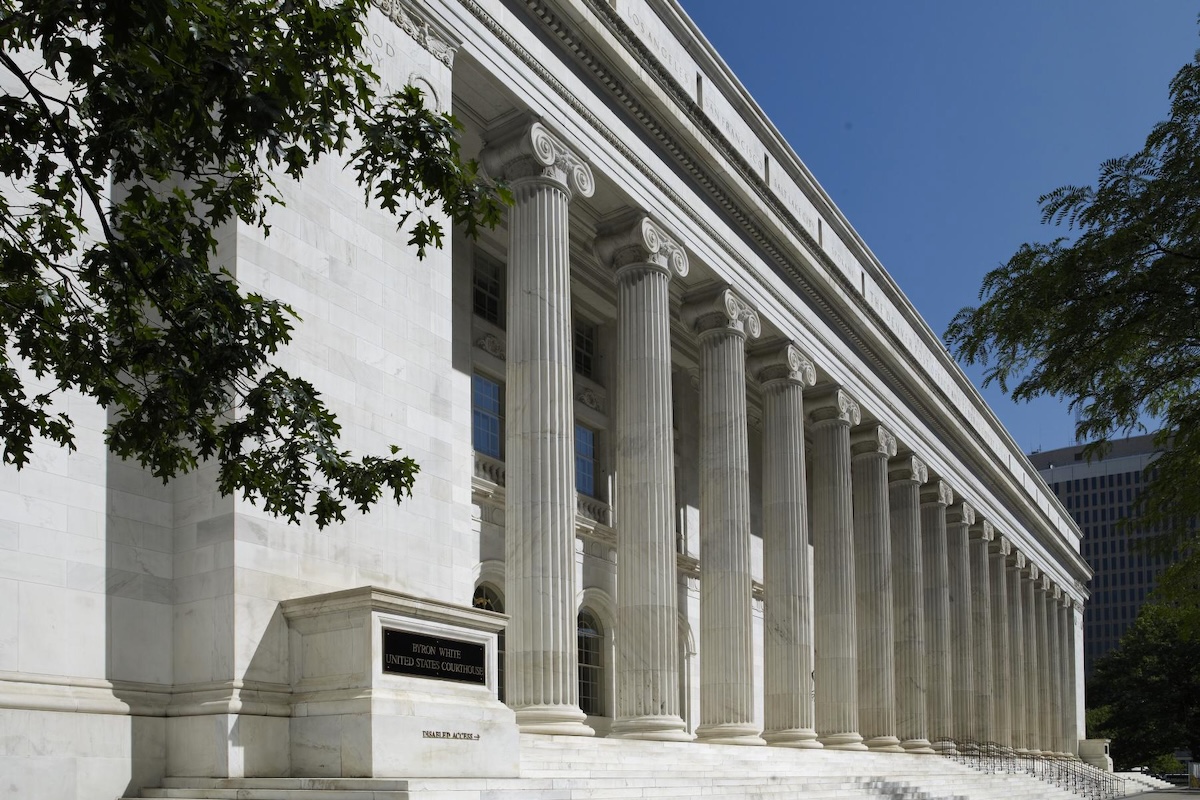
The U.S. 10th Circuit Court of Appeals has held the Citizen Potawatomi Nation’s Oklahoma reservation was disestablished by an act of Congress in 1891 while considering the appeal of Thomas Roye Wahpekeche.
Wahpekeche, a Kickapoo Indian, was convicted in state court of five counts of sexual crimes which occurred within the former Citizen Potawatomi Reservation. After his conviction, he filed for habeas relief arguing he was an Indian and that his crimes occurred in Indian Country, therefore state courts should have lacked jurisdiction to prosecute his case.
Judge Robert Bacharach, writing for a three-judge panel, disagreed.
“[In the 1891 statute] Congress recognized that the Citizen Potawatomi Tribe had agreed to ‘cede, relinquish, and forever and absolutely surrender to the United States all their claim, title and interest of every kind and character in and to [a tract of land described in detail],'” Bacharach wrote. “The statute described the tribe’s surrender of interest as forever and absolute, and the Supreme Court has characterized this language as sufficiently clear to disestablish a reservation. Given that characterization of the statutory language, we’ve referred to the Citizen Potawatomi Reservation as a thing of the past.”
The ruling keeps Wahpekeche in state custody and provides clear precedent that the Citizen Potawatomi Nation’s Oklahoma reservation has been disestablished by Congress.
Since the McGirt v. Oklahoma decision found the Muscogee Nation Reservation was never disestablished, several other tribes in the state have had their reservations recognized, while others have had their disestablishment confirmed.
Many tribal governments in the former Indian Territory of eastern Oklahoma were never disestablished by Congress. Tribes whose reservation have been recognized subsequent to the McGirt decision include the Cherokee, Seminole, Choctaw, Chickasaw, Quapaw, Peoria, Miami, Ottawa and Wyandotte nations.
Conversely, on the western side of the state in the former Oklahoma Territory, most reservations were explicitly disestablished by Congress. Courts have also found the Cheyenne and Arapaho Tribes and Osage Nation reservations were disestablished. (The Osage Nation’s initial disestablishment case was decided before the McGirt decision, and some attorneys argue their reservation should be re-recognized in light of the McGirt decision.)
OCCA takes second look at riot statute in Terry II

For the second time in as many years, the Oklahoma Court of Criminal Appeals has weighed in on a question referred to it by the 10th Circuit Court of Appeals involving Oklahoma’s riot statute. Since the court already ruled on the case Terry v. Drummond last year, the second decision in the case is typically referred to as Terry II.
In Terry I, the Court of Criminal Appeals was asked whether Oklahoma’s riot statute “require(s) the state to prove the defendant consciously disregarded a substantial risk that his communications would be viewed as threatening violence toward another to convict for threats constituting riot?”
The state’s top criminal court answered in the negative, finding Oklahoma’s riot statute “does not require the state in a charge of riot to prove the defendant ‘consciously disregarded a substantial risk that his communications would be viewed as threatening violence toward another.'”
In Terry II, the 10th Circuit asked four clarifying questions of the Oklahoma Court of Criminal Appeals:
- “If [Section] 1311 does require the state in a threats prosecution to prove a defendant had a mens rea (culpable state of mind) of willfulness, does ‘willfulness’ mean that, under Oklahoma law, a defendant must have at least ‘consciously disregard[ed] a substantial and unjustifiable risk’ that ‘others could regard his statements as threatening violence?'”;
- Does Oklahoma’s riot statute cover speech at all?;
- “Does ‘any threat to use force or violence’ in [Section] 1311 cover only ‘true threats‘? True threats are ‘statements where the speaker means to communicate a serious expression of an intent to commit an act of unlawful violence to a particular individual or group of individuals'”; and
- “The OCCA’s opinion states that [Section] 1311 requires ‘mutual or common intent’ along with ‘immediate power of execution,’ which together ‘substantially produce the same effect’ as requiring proof a defendant ‘consciously disregarded a substantial risk.’ How do these other requirements satisfy Counterman’s mandate that the state in a threats prosecution must prove a defendant’s subjective intent of recklessness?”
The 10th Circuit’s main concern appeared to be whether Oklahoma’s riot statute is constitutional under the U.S. Supreme Court’s 2023 ruling Counterman v. Colorado, and a 4-1 majority of the Oklahoma Court of Criminal Appeals indicated they do not think Counterman is applicable to Oklahoma’s century-old statute.
In answering the first question, Judge Scott Rowland, who wrote for the four-judge majority, found Oklahoma statutes define willfulness for the court. He also noted Oklahoma’s riot statute requires willfulness, a common intent and the immediate power to execute threats.
“In answering Certified Question 1, we again decline to hold that Counterman requires proof of additional elements to prove a violation of Section 1311,” Rowland wrote. “In so holding, we clarify what we alluded to in Terry I: Satisfying the elements of Oklahoma’s riot statute, as set forth in Terry I, would necessarily prove more than conscious disregard of a substantial and unjustifiable risk that the statements could be regarded as threatening violence. Furthermore, we explicitly adopt the definition of willfulness in Title 21, Section 92 as the willfulness required under state law for a threat-based violation of Section 1311.”
On the second question Rowland clarified that Oklahoma’s statute can include an element of speech, but will always include other non-speech elements.
“Section 1311 covers speech since some communication may be an element of the crime, but it does not target speech the way statutes penalizing pure speech do,” Rowland wrote.
The majority answered the third question in the negative.
“The Supreme Court coined the true threats doctrine 56 years ago in Watts v. United States,” Rowland wrote. “Since then, the court has never applied the true threats doctrine to a statute which, like Section 1311, criminalizes a combination of conduct and some speech or expressive conduct rather than pure speech. To hold that the threat referenced in Certified Question 3 must be a true threat is to hold that Section 1311 necessarily incorporates among its elements the Counterman mens rea standard. We rejected that contention in Terry I and in answering Certified Question 1.”
And on the final question, the judges argued riot prosecutions in Oklahoma are not “threats prosecutions” since they include non-speech elements.
“Section 1311 can never be satisfied by the speakers’ words alone, no matter how threatening. It requires the conduct of assembling with at least two other persons and reaching a mutual or common intent to threaten violence,” Rowland wrote. “This is constitutionally significant because American law has long upheld the notion that persons acting in concert to commit crimes pose a greater danger to society than a single actor.”
The Oklahoma Court of Criminal Appeals’ interpretation of Oklahoma law is binding on the 10th Circuit Court of Appeals. However, the circuit court may still rule on whether the state law violates federal law. Likewise, the 10th Circuit Court of Appeals’ interpretations of federal law are general binding on state courts.
The lone partial concurrence and partial dissent came from Judge David Lewis, who agreed with the majority’s use of the statutory definition of willfulness and their answer to the second question, but he dissented to the rest of the opinion.
He argued the 10th Circuit judges were clearly concerned about the statute’s constitutionality under Counterman, so the court should read Counterman’s requirements into Oklahoma’s definition of willfulness.
“A statute punishing threatening speech must include a mens rea of at least recklessness to distinguish criminal threats from speech protected by the First Amendment,” Lewis wrote. “This court can undoubtedly interpret and apply Section 1311 within the parameters of Counterman by defining the ‘willfulness’ element for riotous threats to require proof that defendants making the threat consciously disregarded a substantial and unjustifiable risk that others could regard the statement as threatening force or violence.”
He also argued Oklahoma’s riot statute should require a “true threat.”
“Question No. 3, the Court of Appeals asks whether the threats punishable in Section 1311 are limited to ‘true threats.’ We should answer ‘Yes.’ True threats are ‘statements where the speaker means to communicate a serious expression of an intent to commit an act of unlawful violence to a particular individual or group of individuals,'” Lewis wrote.
Emma Delaney Hancock conviction affirmed

The Oklahoma Court of Criminal Appeals affirmed Emma Delaney Hancock’s 2024 conviction for inappropriate communication with a 15-year-old student and inappropriate images she showed eighth-grade students.
Hancock, a former Wellston Public Schools substitute teacher, appealed the conviction handed down by a Lincoln County jury. She faced five counts heading into the trial, but was only found guilty of two, both for soliciting sexual conduct or communication with a minor by use of technology.
She appealed the conviction on three grounds. Through her appeals attorney, James Hodgens, she argued ineffective counsel based on claims that her trial attorney, Billy Coyle, omitted exculpatory evidence and failed to subpoena lead witnesses, such as former Oklahoma State Bureau of Investigation Agent Kevin Garrett, who had become Lincoln County’s sheriff by the time of Hancock’s trail. The appeals court rejected the argument in an opinion authored by Presiding Judge Gary Lumpkin.
“The argument contained in appellant’s brief regarding counsel’s ineffectiveness is simply a series of conclusory and speculative statements about the value of (Garrett’s) testimony to the defense,” Lumpkin wrote.
Hancock also argued that the trial court made an error in their denial of her motion for a mistrial and that Vanessa Guinn, lead forensic interviewer for the Child Advocacy Center of Central Oklahoma, improperly testified as an expert.
“The record demonstrates the propriety of Guinn’s testimony. Appellant has failed to explain her position regarding the testimony, much less show any error flowing from it,” Lumpkin wrote.
Hancock was sentenced to three years of incarceration on count one and three years with two suspended on count two. Both sentences are to run consecutively, and she will face probation upon release.
‘Opposite of oversight’: Byrd releases Varnum Public Schools audit

State Auditor and Inspector Cindy Byrd released an investigative audit of Varnum Public Schools on March 19 that shed light on the actions of a bad actor no longer employed by the district.
“We had a particularly bad actor in this case, but the ultimate responsibility falls on the members of the school board,” Byrd said. “One of the fundamental duties of a school board is to keep an eye on the money. This includes overseeing the integrity of deposits and withdrawals from the district’s account. Blind trust is the opposite of oversight.”
The “bad actor” in question is identified in the 15-page audit report (embedded below) as former encumbrance clerk Stacey Benard. The audit was requested by Seminole County District Attorney Erik Johnson’s office in response to concerns raised by prior independent audits and the Seminole County Sheriff’s Office. It was limited in scope to June 1, 2018, through June 30, 2022.
Johnson, who was reelected by default Friday, said March 22 that his office will make a charging decision after reviewing the audit.
Auditors found that Benard misappropriated $9,621.80 through a “check tampering scheme” and $9,581.55 from activity fund deposits.
“During Fiscal Year 2021, cash collections from fundraisers, event gate fees and concession sales, all funds that were required to be deposited into the activity fund, exceeded recorded bank deposits by at least $9,581.80,” auditors wrote.
The audit notes that “the actual loss may be greater” because the review was limited to deposits with documentation available, and “numerous records were missing.”
Auditors also found that Benard engaged in improper General Fund practices by using a check tampering scheme to redirect $28,366.51 in General Fund money to the Activity Fund. Auditors wrote that they were unable to determine if the redirected funds were used to cover overspending or shortages caused by misappropriation. Separately, auditors found that a General Fund check for $4,704.40 was used to pay three invoices from cheerleading gear supplier Cheerzone while Benard was the cheer sponsor.
Benard signed a resignation agreement with the school in August 2021 that acknowledged the district’s belief she was embezzling, but said “that the factual allegations are disputed” and there were no official findings. She also agreed to pay $50,000 in restitution, but only made two $500 payments before she stopped on the advice of counsel. Auditors noted the contradiction between the resignation agreement language and the existence of a restitution agreement.
“This created an apparent inconsistency between the district’s position that no findings had been reached, and the inclusion of a repayment obligation tied to alleged embezzlement,” auditors wrote.
Varnum Public Schools Superintendent Jon Hadley, who was not superintendent during the period the audit reviewed, said the district has since “strengthened financial procedures.”
“The actions described in the audit occurred approximately five years ago. Since that time, the district’s administration and leadership team, as well as the structure and dynamics of the board, have changed significantly,” Hadley said. “Furthermore, the district has strengthened financial procedures, internal controls, oversight and transparency to ensure strong safeguards are in place, so that public funds and resources are managed responsibly and carefully in the best interest of our district, students and taxpayers.”
Auditors uncovered additional concerns, such as a lack of adequate supporting documentation for Amazon purchases and 150 of 206 General Fund checks they tested, improper signature practices and unauthorized user access.
Auditors wrote that the combination of “using a signature stamp,” unauthorized signatures — including those of two board members, who are still on the board and were not authorized signers on the General Fund account — and the accepted practice of signing for other individuals “greatly contributed to the findings in this report.”
“The signature stamp strikes again,” Byrd said. “I strongly encourage every government entity in Oklahoma to discontinue the use of signature stamps and implement stricter controls over authorization for approvals.”
Read the Varnum Public Schools audit