


The 10th Circuit Court of Appeals published an opinion Monday reversing the dismissal of a civil rights lawsuit brought by the estate of Terence Crutcher against the City of Tulsa and former Tulsa Police Department officer Betty Shelby. The decision in Manning v. Tulsa sends the case back to the U.S. District Court for the Northern District of Oklahoma.
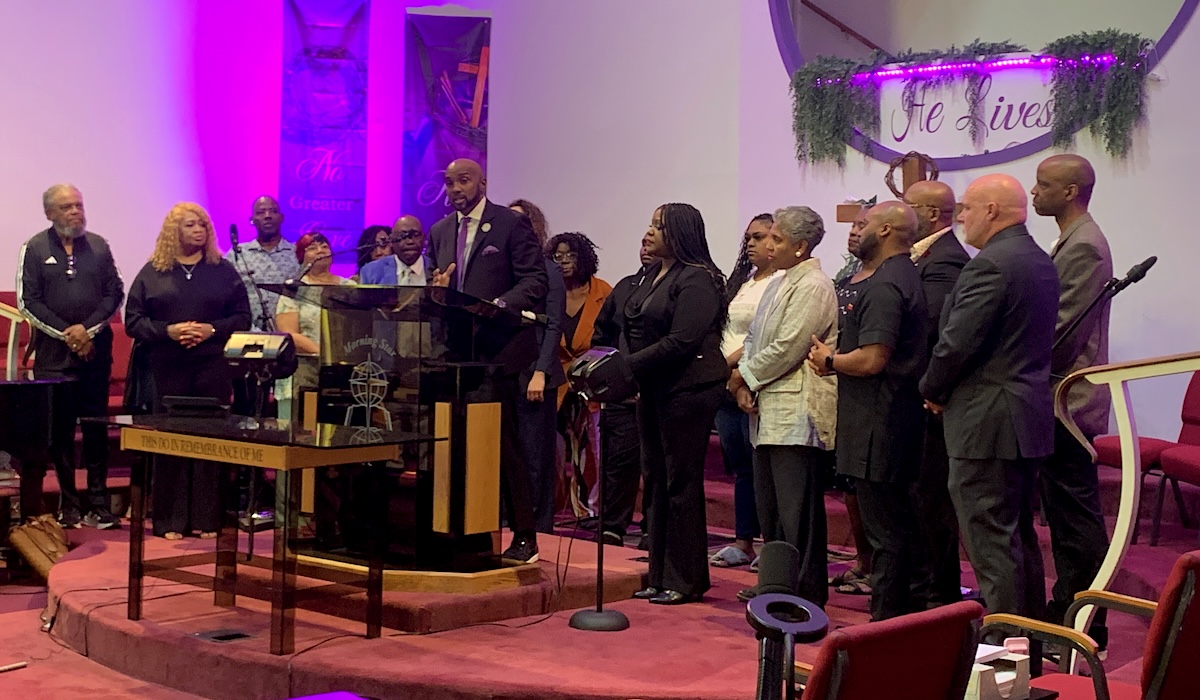
“This moment did not come easy. It came after a decade of unimaginable loss, relentless advocacy and building a movement built on truth and accountability and most importantly a God they love,” Tiffany Crutcher, Terrence’s twin sister, said at a Tuesday press conference. “This victory belongs to us all. But let me be clear, this is not the end. This is a reminder of what is possible when we refuse to be silent and we refuse to stand down and we refuse to let anyone or anything rob us of hope.”
Crutcher, a Black man, was shot and killed in September 2016 by Shelby, a white police officer, while he was unarmed and standing near his vehicle. At the same time Shelby fired her handgun, another officer, Tyler Turnbough, shot at Crutcher with his Taser. Shelby was charged with manslaughter days later but acquitted by a jury in 2017.
“What I want this community to understand is that Terence was so much more than that video we saw,” attorney Damario Solomon-Simmons said during the press conference. “He was a father. He was a son. He was a brother, a twin brother. He was a man who was trying to better himself because he was literally coming from school, Tulsa Community College, when this happened. So he was a victim twice: He was a victim of a shooting, and he was the victim of a smear campaign and a devious coverup by the city.”
While the family’s original lawsuit included several claims, the 10th circuit remanded two back to the district court: whether Shelby violated Crutcher’s civil rights when she shot him and whether the federal court should exercise supplemental jurisdiction over state law claims against the City of Tulsa.
In 2024, District Court Judge for the District of Kansas Eric Melgren substantively dismissed the estate’s excessive force claims against Shelby and procedurally dismissed the state law claims against the City of Tulsa for failing to meet the requirements for supplemental jurisdiction. (Melgren was handling the case owing to the Northern District of Oklahoma’s ongoing judge shortage.)
“Here, it is plaintiff’s burden to demonstrate that it was clearly established that an officer cannot use deadly force on a suspect who: has diminished capacity; was in an open, unconfined area; reportedly committed only non-violent misdemeanors; ignored orders to stop and get on his knees as he slowly walked away from an officer towards a parked vehicle with his hands up; and when he reached the door of the vehicle lowered his arm,” Melgren wrote. “And ‘plaintiff, through his counsel, has simply failed to carry the burden assigned to him by law.’ Therefore, the court grants officer Shelby’s motion for summary judgment, finding that qualified immunity bars plaintiff’s Fourth Amendment claim against her.”
A 10th Circuit panel disagreed with Melgren’s characterization of the bar for excessive force complaints to overcome qualified immunity claims, finding it is clearly established an officer may not use deadly force against an unarmed individual who poses no threat.
“[Melgren]’s account fails to assume that Crutcher kept his hands raised when he reached the door of the vehicle,” Judge Nancy Moritz wrote. “As the estate argues, the proper iteration of the right is broader and hinges on the use of deadly force against an unarmed individual who poses no threat.”
The appeals court ultimately remanded the excessive force claim against Shelby and the state law claims against the city back to the federal district court in Tulsa.
“Viewing the disputed facts in the estate’s favor, Shelby violated Crutcher’s clearly established constitutional rights, so we reverse the district court’s grant of summary judgment based on qualified immunity and remand for further proceedings,” Moritz wrote. “We also direct the district court to reconsider its dismissal of the estate’s state-law wrongful-death claim, since the district court only declined supplemental jurisdiction because no federal claims remained.”
Shelby’s attorney, Scott Wood, told the Tulsa World his client would talk to the City of Tulsa before deciding whether to file a petition for rehearing or an appeal to the U.S. Supreme Court. A spokesperson for the City of Tulsa did not respond to a request for comment before the publication of this article.
During Tuesday’s press conference, Solomon-Simmons seemed eager for the case to go to trial in federal court, but he did hint he was open to settlement negotiations.
“Unlike the criminal trial, the full story will come out if we get to federal court. And unlike the criminal trial where they didn’t hear from experts from our side, they will hear our experts if the jury gets this. And unlike the criminal trial, they will hear about Terence and his family and what it meant for him to be a part of this community,” Solomon-Simmons said. “We believe with all our might and all our heart that if the jury sees what the 10th Circuit sees, we will get justice for this family. But I hope this city does not cause this family to go through that. They have suffered enough (…) I’m calling on the city to make sure that this family does not have to see another trial.”
Asked if either Shelby or attorneys for the city had contacted the estate about settlement negotiations, Solomon-Simmons said his clients had not heard from either party.
“No one has contacted us about anything,” Solomon-Simmons said.
Court reverses summary judgement dismissing Shelby excessive force claim
When reviewing summary judgments on appeal, courts look at the facts in a light most favorable toward the non-moving party to determine if a reasonable jury could disagree on the issue.
According to the 10th Circuit’s description of the facts in Crutcher’s favor, Shelby drove past Crutcher on the way to another call and “believe(d) (he) was either on PCP or experiencing a mental-health crisis” before arriving at an empty, running SUV. She got out of her patrol car — without turning on her dashcam — to examine the SUV and then saw Crutcher walking toward her.
RELATED
OKCPD officers denied qualified immunity for death of Dawawn McCoy at Biltmore Hotel by Tristan Loveless

Shelby then yelled at Crutcher to ask if the car was his, but she said he did not respond. As he continued walking, she yelled at him to take his hands out of his pockets, and he slowly put both arms in the air. The parties dispute whether Crutcher kept his hands up throughout the encounter or returned them to his pockets.
After Turnbough arrived and a TPD helicopter circled, Crutcher walked toward the SUV with his hands in the air. Shelby drew her gun and ordered Crutcher to stop while Turnbough drew his Taser. Shelby and Turnbough fired simultaneously. Crutcher was pronounced dead within an hour.
“Despite Crutcher’s partial compliance with police commands, Shelby shot Crutcher while he was standing with his hands up, unarmed, next to the mostly rolled-up driver’s side window, no weapon within reach,” Moritz wrote.
Crutcher’s estate alleged Shelby violated his civil rights by using excessive force against him, and the 10th Circuit panel agreed.
RELATED
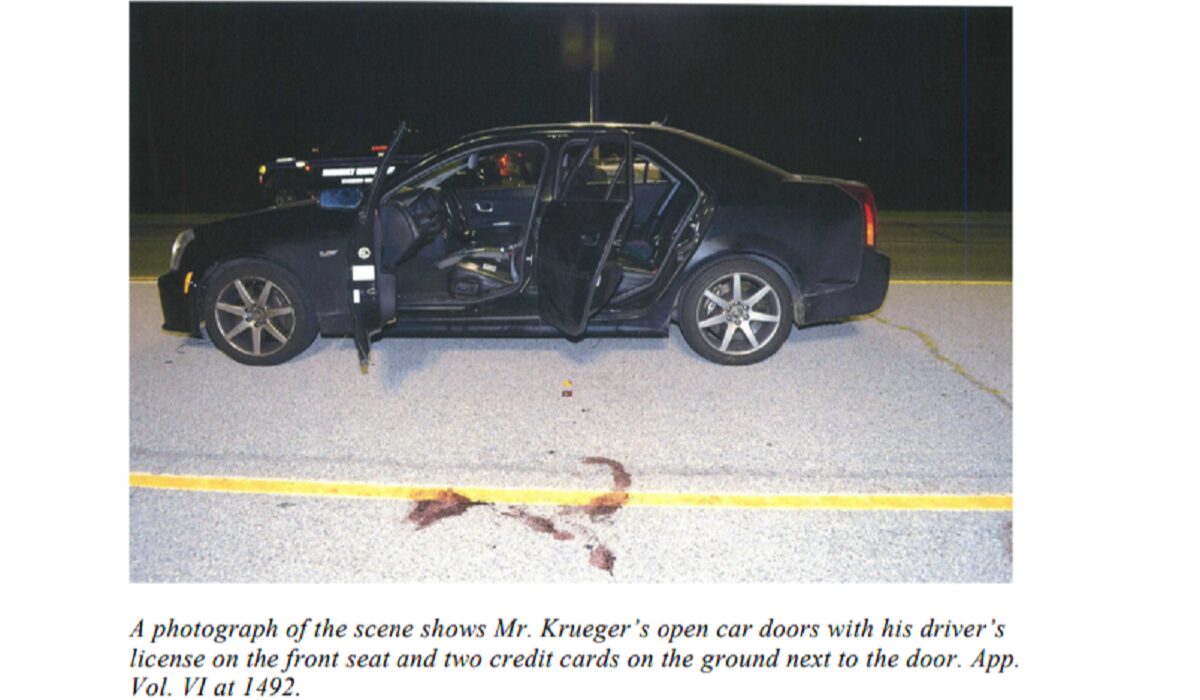
10th Circuit: Wagoner County officers potentially liable in death of Jeffrey Krueger by Tristan Loveless
“Here, all three Graham factors point in the same direction: that Shelby’s use of force was unreasonable. The first factor — the severity of the crime — favors the estate, considering that Shelby suspected Crutcher of public intoxication and obstruction. These offenses are at most ‘nonviolent misdemeanors,’ as the district court noted,” Moritz wrote. “The same is true of the second Graham factor — the immediacy of the threat — as illuminated by the four Larsen factors. There was no reason for Shelby to think Crutcher had a weapon, so the first and second Larsen factors necessarily favor the estate. (…) As for the third Larsen factor, the 10-foot ‘distance separating’ Shelby and Crutcher strongly weighs against the use of force, given Crutcher’s lack of a weapon. And on the fourth Larsen factor, the undisputed facts do not suggest that Crutcher, who had walked slowly toward the SUV with his hands in the air, ‘manifested any intent’ to harm Shelby or anyone else.”
Karin Portlock, another attorney representing the Crutcher estate, argued the ruling sends a strong message about law enforcement accountability.
“A police officer cannot shoot and kill an unarmed person who is holding their hands up, has no weapon and is posing no threat,” Portlock said. “The court reminded us that an officer who commits civil rights violations in the United States of America must be held accountable. We cannot shield cops who do not uphold the constitution and commit to our safety. We are proud of the court’s ruling and for the court’s courage to call out the injustice of Terence’s killing. And we also know this comes at a critical moment in our country when law enforcement accountability is paramount. We cannot live in a country where police officers instill fear instead of confidence in our communities.”
The appellate decision in the Crutcher lawsuit becomes at least the third time the 10th Circuit has overturned a qualified immunity finding in an Oklahoma case over the past year:
- In August, Wagoner County law enforcement officers were found not to be entitled to qualified immunity in the 2019 fatal beating of Jeffrey Krueger;
- In November, a pair of Bartlesville officers were found not to be entitled to qualified immunity in the 2019 shooting death of Thomas Gay; and
- In January, three Oklahoma City officers were determined not to be entitled to qualified immunity in the 2020 death of Dawawn McCoy.