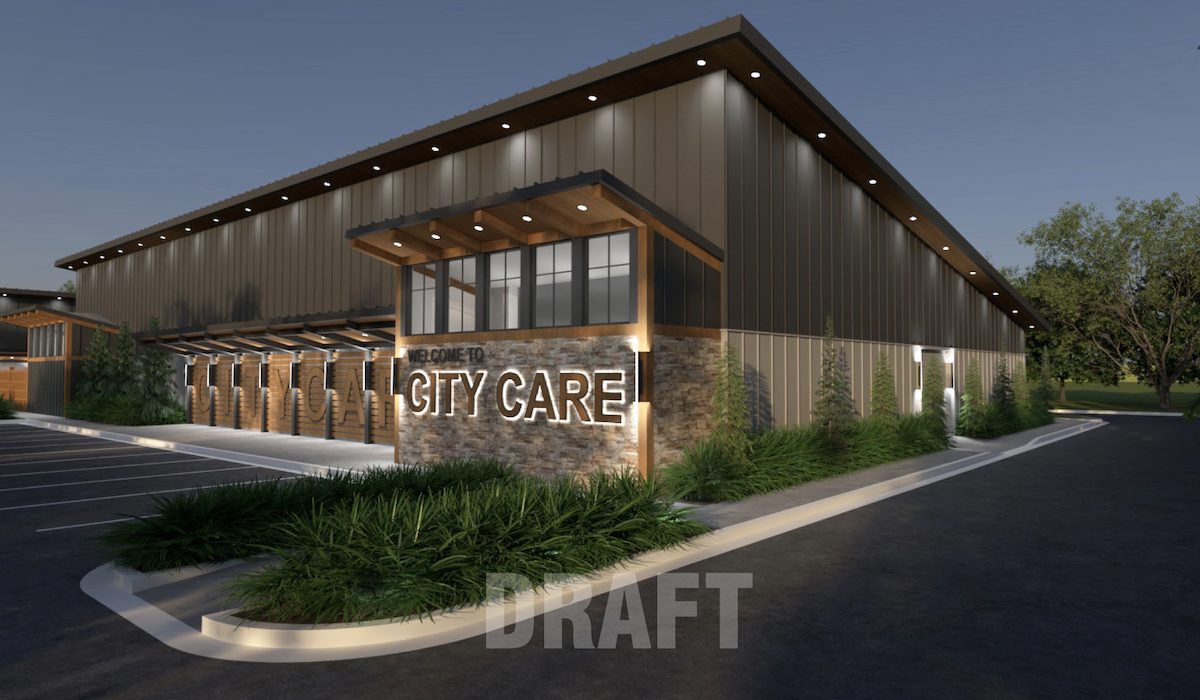
Norman residents will vote on a bond proposal to fund an $8 million homeless shelter during the election set for Tuesday, April 7, 2026. (Screenshot)
Support Journalism
Six years after Norman voters narrowly rejected a proposal for a city-owned homeless shelter, many municipal leaders are hoping they will change their minds for an April 7 election that proposes an $8 million permanent shelter owned by the city, but operated by a third party.
Voters will have to make other decisions April 7 beyond the homeless shelter. The renewal of a long-term bond package for streets would provide $35 million for resurfacing, and a separate proposal would raise the city’s guest tax from 8 to 10 percent. Two minor changes to the city’s charter are also on the ballot.
But it’s the homeless shelter that has drawn the most attention at recent council meetings, where the majority of those who took the time to speak have voiced their support, while others remain concerned about the proposed location and long-term costs. Norman, like other growing cities of similar size in the state, has long grappled with how to handle its homeless population with limited success, and recent point-in-time counts have shown a significant increase in homelessness since 2021.
Norman Mayor Stephen Holman said he feels optimistic that, this time around, voters will have a different mindset when it comes to how the city handles its homeless population.
“When we proposed a bond item six years ago to do a shelter, right at the height of COVID in 2020, there was no location, there was no design, no budget, no operator. It was really just a $5 million blank check for a shelter to be determined,” Holman said. “It failed by less than 300 votes. The other three bond items that were on that same ballot failed by a lot — by more than 10 percent.”
Norman’s current homeless shelter sits as a temporary facility located in a former storefront. It is run by City Care and can house about 50 people overnight. The new facility would include bed space for 120 people. On most nights, Holman said about 15 to 20 people are turned away from the current shelter, which lacks numerous amenities.
“There are no showers, there are no medical rooms, there are no family rooms, there is no animal kennel or pet kennels, so there are a bunch of people that don’t stay at the shelter because it’s really just basic. It’s a bunk bed to sleep in, that’s it,” Holman said. “And then the building that it’s in is just old — a couple of commercial storefronts that the city was using for storage before. So it was not meant to be a shelter, and there are no services around it either, so it’s really not in an ideal location for the people that need the service or for businesses and things like that around it.”
Cleveland County’s two most recent point-in-time counts found 238 people experiencing homelessness in January 2025 and 240 in 2024. The 2026 count has taken place, but its results have yet to be tabulated and released. Holman said that while the survey is county-wide, most of the respondents are found in Norman, the largest city with about 120,000 residents.
“It fluctuates, of course, and it definitely doesn’t capture everybody,” he said. “We always assume it’s a bit higher. The actual number of people that are homeless across our city limits is probably higher than that.”
Some oppose shelter expense, location
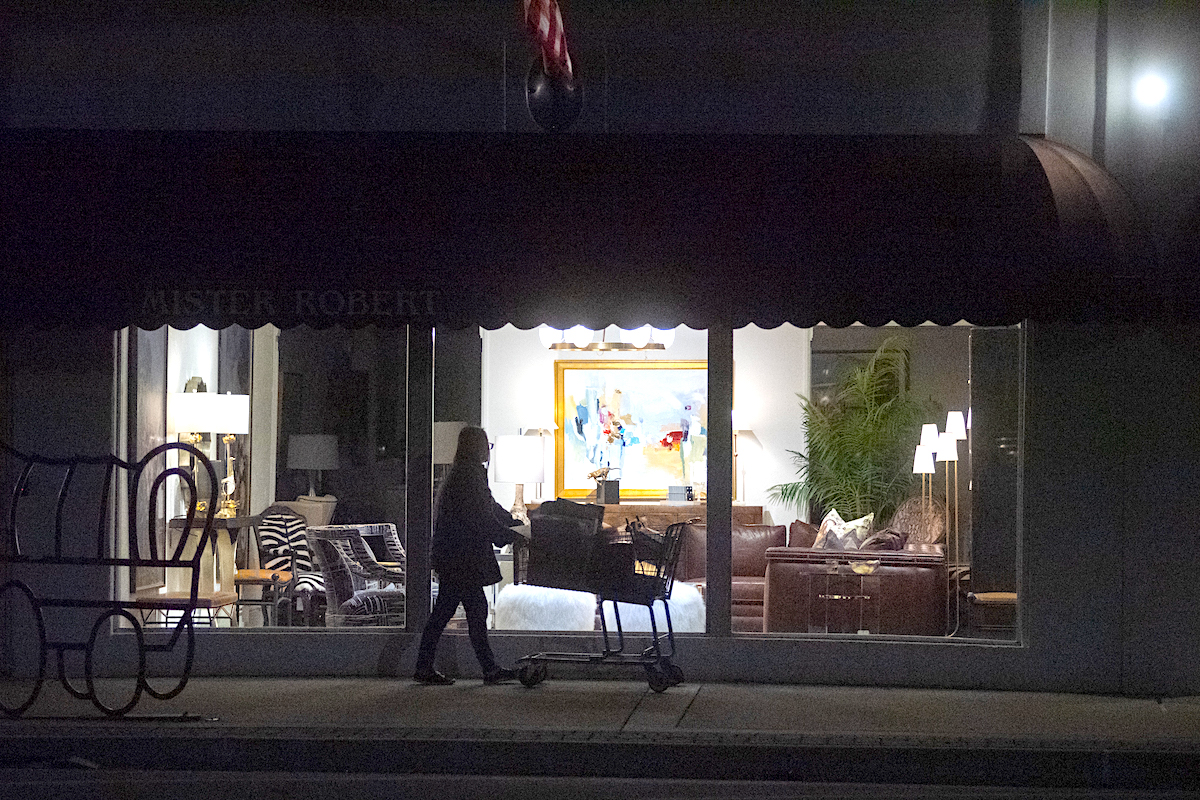
A woman, pushing her belongings in a grocery cart, looks through the window of a furniture store in downtown Norman, Oklahoma, on Sunday, Feb. 12, 2023. (Michael Duncan)
While Holman hopes and expects the homeless shelter bond to pass, not everyone is sold on the proposal.
In two January city council meetings, several residents expressed either outright objection to the shelter or raised significant concerns about its cost and impact on neighborhoods.
The new shelter would be located on land purchased by the city along Reed Avenue on the city’s east side, south of Griffin Memorial Hospital and near organizations like the Cleveland County Health Department and the Central Oklahoma Community Mental Health Center.
At a Jan. 13 meeting, several residents spoke about the shelter, including Ward 4 resident Evan Taylor, who questioned if enough thought has gone into how the shelter will impact its surroundings.
“The renderings have focused on the building footprint and the architectural form, but they didn’t situate the facility within the residential context,” Taylor said. “As a result, it did not convey how access points, pedestrian movement, or exterior activity interact with the adjacent neighborhoods and issues that typically would be examined once a specific site is selected. That discussion understandably centered on building form, cost control, and visual compatibility, but what it did not address in any systematic way were the operational assumptions that will ultimately determine the neighborhood impact.”
Ward 5 resident Bill Hutzel, whose wife, Dianna, is competing in the April 7 runoff for the Ward 5 council seat, said sheltering the homeless shouldn’t be something the city is directly involved in.
RELATED
From left: Trey Kirby and Dianna Hutzel are set for a runoff election to decide the winner of the Norman City Council Ward 5 seat on Tuesday, April 7, 2026. (NonDoc)
“Anytime the government gets in the business of solving a problem, it ends up costing more,” he said. “The Salvation Army made a fantastic presentation about their expansion and upcoming goals. The Salvation Army has been in Norman since 1892 and has many connections with other organizations and companies to help solve many problems and areas of need for the people of Norman. Let the experts at the Salvation Army do what they’ve done for over 100 years. The bottom line is Norman needs to get out of the shelter business.”
Holman said the city purchased the proposed shelter site from the Oklahoma Department of Mental Health and Substance Abuse Services for $75,000. He said the city currently spends about $800,000 each year on the current shelter managed by City Care. That organization would also operate the new shelter if it is built.
The cost to run the shelter, paid to City Care out of Norman’s General Fund budget, would be more than the cost to run the temporary shelter, but Holman said the trade-off involves more than doubling the capacity of the current facility. The city has $107 million in its General Fund for Fiscal Year 2026.
“We estimate probably about $1 million (annually) or so with the expanded shelter,” Holman said. “It’s not anticipated that it will be a 24/7 operation. It will be more of an overnight shelter. And then, during the day, there is office space for staff. But Food and Shelter for Friends next door is more of a day center. That’s where the breakfast and lunch would be, and potentially dinner as well. So in the end, it will fill a huge need, increase capacity, and it will still be less than 1 percent out of our entire General Fund budget.”
Holman said for those at the median home price in Norman of about $257,000, the April 7 ballot proposal’s cost would equal about 73 cents per month over the lifetime of the 20-year bond, or about $175 in total.
For Ward 1 Councilman David Gandesberry, that’s a small price to pay. In remarks at the end of the Jan. 27 council meeting, he said building the new shelter would ensure that a portion of the community is heard.
“As a person, I live by two mottos that I feel like went by the wayside: the Norman Way (and the) Oklahoma Standard,” Gandesberry said. “We’re supposed to care about people.”
Ward 4 Councilmember Helen Grant, Ward 6 Councilmember Joshua Hinkle and Ward 7 Councilmember Kimberly Blodgett have also explicitly expressed support for the shelter.
Matt Patterson has spent 20 years in Oklahoma journalism covering a variety of topics for The Oklahoman, The Edmond Sun and Lawton Constitution. He joined NonDoc in 2019. Email story tips and ideas to matt@nondoc.com.