



Amid years of confusion, concern and consternation about the Oklahoma Breeding and Development Fund, horse racing stakeholders remain unsure what to take away from a third-party report or who may ultimately offer additional answers about $1 million of accounting discrepancies.
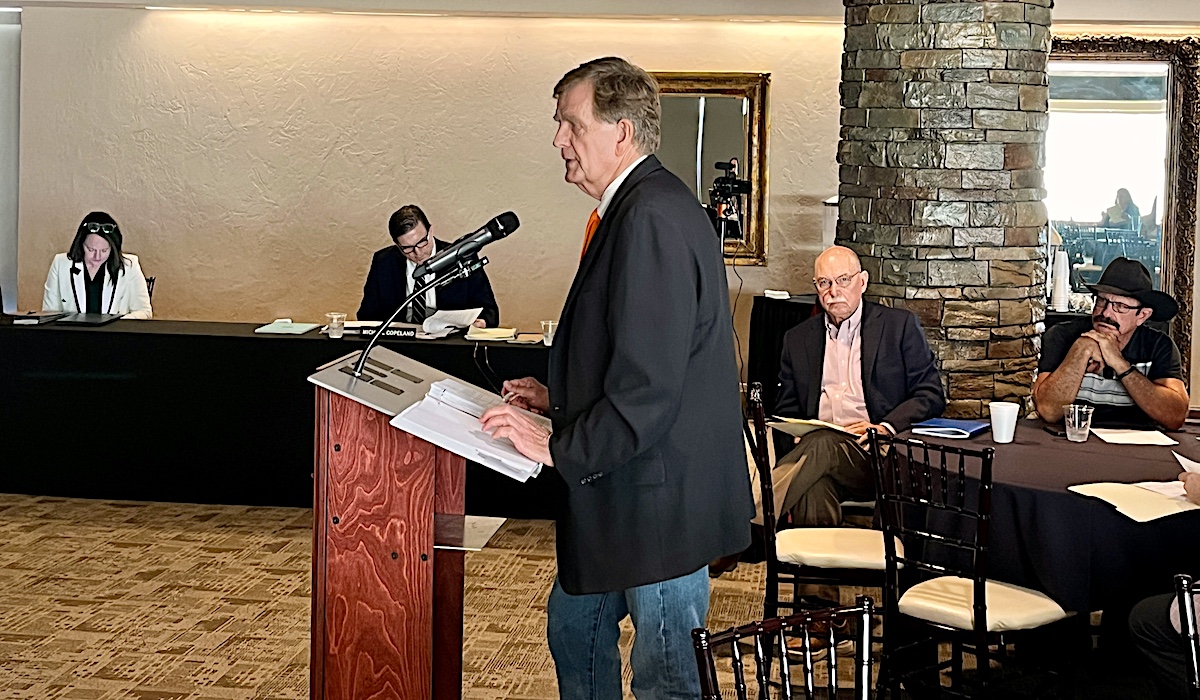
“A case has been opened up to the Oklahoma State Bureau of Investigation, and a case file has been assigned to it,” Michael Copeland, the Oklahoma Horse Racing Commission’s agency attorney, said during a meeting Thursday. “Anything outside of that probably should not be discussed in public.”
Minutes later, commissioners approved Copeland’s request to keep pursuing a new computer system for the so-called “OKBred Fund,” which collects and distributes around $9 million a year to horsemen.
Amid allegations that the fund lacked proper financial controls for years, on Jan. 15 the commission reviewed a reconciliation report prepared by CPA Shanna Dutton and voted to send it to the OSBI and State Auditor and Inspector’s Office for investigation.
“The objective of this project was to determine the accurate balance of the OKBred Fund as of June 30, 2025, and to evaluate the internal controls and processes associated with the management of the account,” Dutton wrote in her report. “Early in the process, it became clear that the OKBred account’s operational structure lacked sufficient financial controls, system support, and interdepartmental oversight. These weaknesses directly contributed to reporting inconsistencies and increased the opportunity for error and potential fraud.”
With concerns about the OKBred Fund and other matters involving Oklahoma horse racing already presented to state and federal law enforcement over the past two years, industry stakeholders sought the release of Dutton’s report for months.
Pressed by media and Rep. Erick Harris to reveal what had been presented privately to commissioners, Copeland released a 21-page packet Jan. 27 that also included a letter from interim OHRC director Amanda English and an email sent to Attorney General Gentner Drummond, whose attorneys have sometimes clashed with Copeland while representing commissioners.
“The reconciliation should be treated as a serious, credible warning and a necessary reconstruction of what can be reliably determined from available evidence — but not the final word on causation, responsibility, or the full extent of exposure,” English wrote to commissioners. “Additional independent work may be warranted depending on commission direction and law-enforcement or oversight needs.”
OSBI spokesman Hunter McKee confirmed the agency’s ongoing investigation of the OKBred Fund discrepancies, which Dutton had been retained to assess last year.
In her report, Dutton said she requested, obtained and reviewed “financial data and operational reports” from four Oklahoma state agencies in an attempt to reconcile the so-called “Oklahoma-Bred Fund”:
- the Horse Racing Commission (OHRC);
- the State Treasurer’s Office (OST);
- the State Auditor and Inspector’s Office (OSAI); and
- the Office of Management and Enterprise Services (OMES).
“OHRC employees issue checks internally and also prepare deposits for the bank. Despite handling deposits and issuing checks, OHRC does not receive the bank statements,” Dutton wrote. “OST receives the bank statements and matches cleared checks only to a list of check numbers provided by OHRC. The matching process does not include verification of payee names. Since OHRC provides OST with an editable spreadsheet, the payee and amount fields could be altered without detection, creating a significant control vulnerability.”
While the initial scope of her review “was not to investigate potential fraud,” Dutton said the circumstances of the Oklahoma-Bred Fund’s accounting necessitated four procedures “to reconcile the account and validate check activity.”
“Between Jan. 1, 2022, and June 30, 2025, the aggregate amount of checks that cleared the bank was $893,112 higher than the amounts reported in Binkley,” Dutton wrote of OHRC’s antiquated software system, which featured “minimal internal controls” and had “not been actively supported or updated for several years.”
While OMES has subsequently added greater security to the Binkley system, commissioners voted Thursday for staff to continue pursuing a sole-source request for proposal to have InCompass Solutions — a “leading” horse racing software provider — build a new OKBred Fund management system.
“A total of 65 checks, amounting to $118,532, were marked as ‘cancelled’ (voided) in the Binkley system and reflected as $0 disbursements, despite having previously been paid by the bank,” Dutton wrote. “This discrepancy between bank payment records and Binkley entries resulted in a $118,532 understatement of recorded disbursements.”
TRAO, OQHA both want answers
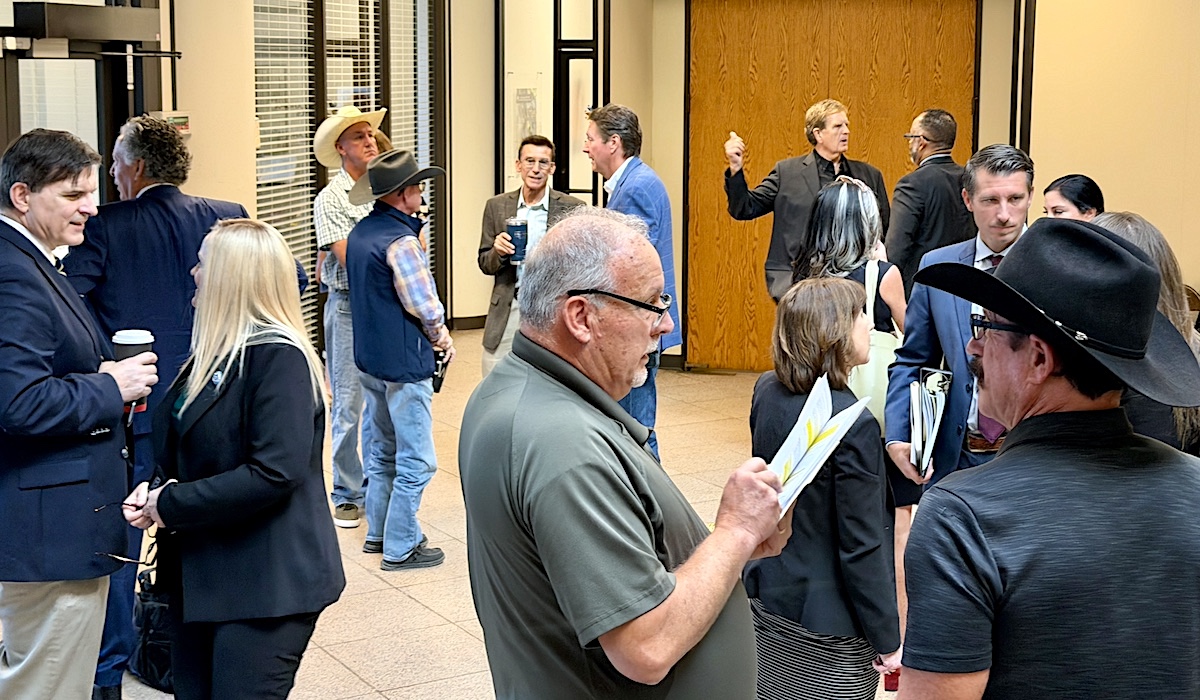
Established by the Legislature in 1983, the Oklahoma-Bred Fund increases income for Oklahoma horse racing and breeding enterprises through purse supplements and awards funded by unclaimed betting tickets, breakage and a percentage of the exotic racing handle. With around $10 million paid into and out of the fund annually, it stands as a valued and valuable revenue stream supporting Oklahoma agriculture.
Following the release of Dutton’s report, leaders of both horsemen associations expressed frustration with a lingering lack of answers.
“Oklahoma’s horse industry is a critical piece of our state’s economy, and the Oklahoma-Bred account provides vital support to horse breeders throughout our state,” Joe Lucas, a longtime consultant for the Thoroughbred Racing Association of Oklahoma, said in a statement. “It is incredibly concerning to TRAO and our members that money is unaccounted for, and we have requested detailed accounting of the funds from the Oklahoma Horse Racing Commission on behalf of our members — which so far has gone unanswered.”
For months, Lucas has repeatedly suggested that OHRC’s management and review of the OKBred Fund has been incompetent and inaccurate.
Krissy Bamberg, executive director of the Oklahoma Quarter Horse Association, offered a similar assessment after reviewing Dutton’s report.
“We are very concerned about the recent reports regarding the Oklahoma-Bred Fund and the audit that was conducted. We have expressed concern for some time about the reconciliation processes of these accounts,” Bamberg said in a statement. “Our association independently tracks all verifiable income into the fund as well as the awards to be paid out to horsemen each year. Based on that tracking, we strongly disagree with the account balances for each breed as reported in the audit.”
To say OQHA and TRAO members have battled in recent years might be underselling the duel, but Lucas and Bamberg seemed mutually disappointed by the OKBred Fund review so far.
“It was our hope that the audit would confirm balances and provide clarity. Instead, it has raised additional questions,” Bamberg said. “We look forward to obtaining the necessary records and working with the commission to determine the accurate balances and identify where the discrepancies exist.”
Lucas eyed answers from law enforcement.
“We look forward to OSBI or the AG digging into the issue to ensure all funds are accounted for, the funds have been distributed appropriately to-date and new processes are put in place to ensure transparency and accountability of these funds moving forward,” Lucas said.
The politics of the ponies

A successful horse trainer-turned industry operator, Joe Lucas is not the first person to suggest Attorney General Gentner Drummond should look into OKBred Fund issues, but he might be in the best position to ask the state’s top cop to weigh in on the drama his office has been hearing about for two years.
In October, Drummond appointed Lucas to the Oklahoma Ethics Commission, making Lucas one of the few members of that regulatory body associated with a pair of PACs that file with the agency.
Now a consultant for TRAO, Lucas is a former president of the organization, which retains legal services from Rep. Chris Kannady (R-OKC). Strong political allies, Drummond and Kannady have each increasingly clashed with Gov. Kevin Stitt, who has used his recent OHRC appointments to swing its membership balance in favor of the Quarter Horse Association.
Who appoints commission?
For years, Oklahoma’s governor appointed all nine members of the OHRC’s regulatory body. In 2024, the Legislature passed HB 3693, which modified industry service rules and transferred four of the nine Horse Racing Commission seats to House and Senate leaders.
With appointments carrying six-year terms, so far only House Speaker Kyle Hilbert has made an appointment: Ryan Terry of Weatherford.
Lucas, for instance, had served on the Horse Racing Commission between 2011 and 2023 as an appointee of Gov. Mary Fallin, but Stitt chose to replace him with G.R. Carter, a legendary quarter horse jockey known for victorious back-flip dismounts and a 1990 scandal he blamed on a friend who had shot a policeman’s dog.
In recent years, OQHA and TRAO have clashed over horse-doping regulations, jockey pay and much more. The feud complicated the tenure of Dr. John Chancey, a longtime industry veterinarian who became the OHRC’s director in early 2023 but resigned as a frustrated whistleblower in August 2025.
“I was a political pawn at some point,” Chancey said in January. “I got to pushing the wrong buttons, I’ll put it that way. Stepping on the wrong toes.”
For two years after he succeeded Kelly Cathey as OHRC director, Chancey scuffed the boots of longtime staff members, voiced concerns about allegedly lingering cartel activity in quarter horse circles, alerted commissioners to the Oklahoma-Bred Fund’s problems and suggested simulcast contracts involving TRAO and tribal casinos were circumventing a state payment requirement.
Over time, Chancey took his concerns about agency issues to the OSBI, FBI and the Attorney General’s Office. He said OSBI agents initially told him they would maintain a “folder” for information he provided, and he said the Attorney General’s Office did not help him with “the cartel stuff.”
“That was early on. I gave up on that with the AG’s office,” Chancey said. “I did get to meet with some of their investigators. We went through everything, all my concerns on all that, and we talked about a small group of individuals — how they were kind of having an unfair advantage in the horse racing on the quarter horse side, but nothing ever came out of that. We never got anywhere on that. Nothing, and it was just dropped. And by then, I started having problems on the simulcasting side and also the Oklahoma-Bred (Fund). And on the Oklahoma-Bred, it was April 2024 when I finally said, ‘Look, I want the budget and financials and stuff on how that thing was ran,’ and that’s when everything went downhill for me after that. So I never got any support as far as that goes. I’d send emails and met with (Deputy Attorney General) Niki Batt numerous times and basically got no support, no guidance, other than just to say, ‘Let everything play out.’ I don’t know what that meant.”
In a statement, Drummond said his office has “consistently provided clear legal advice on the audit, transparency, and related issues.”
“Make no mistake: My office demanded the audit request and its public release,” Drummond said. “On top of the findings, it is undeniable that certain staff have chosen not to follow that advice, raising serious concerns about their judgment. The failures, corruption, and lack of competent professionalism in executive branch agencies under Gov. Stitt are indefensible.”
For his part, Chancey said he eventually met with FBI agents, but he walked away believing they had known little about the topics at hand. Meanwhile, his efforts to terminate the OHRC’s longtime director of operations, Shonna Gore, turned into competing Equal Employment Opportunity Commission complaints that were reviewed by the Attorney General’s Office and presented to the Horse Racing Commission in several executive sessions.
RELATED
‘So many problems’: After reporting to FBI, John Chancey resigns as Horse Racing Commission director by Tres Savage
Gore did not return a phone call seeking an interview for this article, but Chancey’s dispute with her — at least from his perspective — is outlined in the July 2, 2025, email sent by Copeland to Chancey and Drummond that the agency included in its Jan. 27 release of Dutton’s report.
“I want to assure you and General Drummond that the OHRC is fully adhering to the guidance provided by the Attorney General’s Office, and I have been including the AG’s staff on all emails related to [Gore] to give them a chance to object to any decision they deem appropriate,” Copeland wrote to Chancey with Drummond copied. “However, I have significant concerns about the implications of the staff’s guidance, and I believe it is important to provide context to ensure General Drummond is fully informed of the challenges this agency faces in respect to the advice his staff is offering.”
Copeland wrote that Gore had “directly overseen the [OKBred] program and agency IT for nearly a decade” as director of operations.
“[She] has, at best, failed to protect the funds under her care, and it doesn’t appear that she took reasonable efforts to make the commission aware of the seriousness of the systems (sic) vulnerabilities,” Copeland wrote. “Right now, it is impossible to state with certainty whether her actions were simply gross mismanagement or if it was intentional.”
Copeland wrote that “prudent legal practice” would require — at a minimum — the agency’s suspension of Gore, and he said “her extreme mismanagement of the program and the risk she put those funds in would more than justify her termination.”
“It’s difficult to see how any reasonable legal opinion on that could differ, and I am unsure why none of the attorneys from the OHRC or the AG’s office advised the commission of these obvious dangers sooner,” Copeland wrote. “However, despite the enormous fiduciary liability we are now exposed to, the attorney general’s staff has explicitly directed against terminating or even investigating [her] past conduct, directing us to instead focus solely on her future policy violations for any possible discipline.”
Copeland wrote his letter about three weeks after Chancey had hired him at the agency — well into the investigation of Gore’s complaint against Chancey — and he said he’d discovered years of “mismanagement.”
“When we attempted to limit [her] access to our fiduciary’s funds, we received vague warnings that the Attorney General’s Office might withdraw representation if her job duties were altered,” Copeland wrote.
Chancey said Copeland’s letter spurred a meeting with Drummond and other attorneys.
“But then, after that, nothing else happened. And then, by August, I was gone,” Chancey said. “That’s what happened. I was gone.”
Drummond’s office released a copy of the attorney general’s Aug. 6 letter to Chancey:
Recent communications from OHRC’s general counsel to OAG staff have prompted me to further clarify expectations and responsibilities when it comes to interactions between my staff and your agency.
While this office endeavors to reasonably assist whenever and wherever necessary, it must be remembered there are practical limitations to the involvement of the Attorney General’s Office. Counsel is provided as legal guidance for the commissioners. Likewise, members of the Attorney General’s Litigation Unit have intervened strictly as an assistive element for the purpose of addressing and mitigating the current litigation risks. With this in mind, I must be clear that the tangible steps of following and implementing any advice we provide belongs with the agency. Reaching out to employees of the Attorney General’s Office, most particularly members of its litigation unit, regarding practical day-to-day decision-making poses an unacceptable risk of conflict; specifically, the very real risk of adversely impacting the ability of this office to provide legal representation in the event litigation does result.
Members of my office have communicated recommendations to guide the next steps for the Oklahoma Horse Racing Commission. I encourage you to employ the skills and services of your staff and your own general counsel to effectuate that advice.
Chancey resigned about two weeks later after a commission meeting where several staff and stakeholders were called into executive session by commissioners. Months later, commissioners approved a $35,000 severance package for Chancey and presented him with a plaque.
After an extended period of leave, Gore’s OHRC employment ended Oct. 20, although Copeland said the agency could not comment on the terms or circumstances of her departure.
“It’s a mess,” Chancey said. “The whole place is a mess, as you well know by now. I probably didn’t help much, but I tried.”
Follow @NonDocMedia on:
Facebook | X | Text or Email
‘They don’t know what they’re doing’

While Chancey, Copeland and Dutton agree the OKBred Fund’s finances were a “mess” for years, former OHRC budget and finance manager Shawn Richmond said things really should not be so complicated.
“Up until I left, every single penny was balanced every single month, and I don’t know if you can verify that with OMES — because that’s who we sent everything to,” Richmond said Jan. 29. “Everything I had sent them, I had a user folder on the agency network that was saved under my name, and it had every single thing in there, all the backup for everything we had balanced every single month.”
Richmond, who departed OHRC in May 2024 to become chief financial officer at the State Department of Education, said Shonna Gore provided him a copy of Dutton’s reconciliation report after OHRC released it to the horsemen groups in January.
“She called me and she sent me a copy because she said that this was affecting her career and that it would affect my career, so she thought I should know about it,” Richmond said. “Just from reading through the draft, I didn’t see anything in there that was true.”
For instance, Richmond questioned Dutton’s finding that $893,112 of checks that had cleared the bank were unaccounted for in the Binkley system.
“There’s no way that OHRC doesn’t have record of it. I don’t know if they’re just missing stuff when they’re trying to balance and they’re not accounting for everything. That’s my only assumption on how they’re coming up with their information,” Richmond said. “Their accounting is off, and I think that’s the explanation for the numbers that they gave. They don’t know what they’re doing.”
That sentiment spurred Richmond to look for other employment in 2024 as Chancey started his second year as director.
“The reason why I ended up leaving was that we got a new director and we got a new director of law enforcement and we got a new attorney,” Richmond said. “My job was just to help them do what they needed to do and keep the agency in compliance, and a lot of the things they wanted to do were not compliant with the state of Oklahoma. Just to give you an example, one of the things they wanted to do was purchase over $50,000 worth of assault rifles. They wanted to purchase assault rifles for their law enforcement that were on the tracks to carry around, and their justification was the cartel. They said the cartel was everywhere, this and that. That wasn’t for me to say it happens or not, but the director of law enforcement, Brady (Robison), he knew a guy who, I guess, sold assault rifles, and he wanted us to go through this guy. And I told him there was a certain limit I could purchase with our agency P-card. I said, ‘This is well over that. I can’t do that.’ They wanted me to purchase up to the limit and then go back later and purchase up to the limit again. They call that split purchasing in the state of Oklahoma, and that is against the law.”
Richmond said Chancey and then-OHRC attorney Richard Herron became frustrated with him as a result.
“When I told them I couldn’t do that, all hell kind of broke loose, and they thought I was against them and basically said every time they try to find a solution I put another door in front of them. And that may have been the case, but it wasn’t to try to stop them from doing what they were doing, it was to keep the agency compliant and to keep my reputation reputable,” Richmond said. “Every day that went by, there were more and more things that came up that they wanted to do, and I had to explain, ‘We can’t do this.’ They even went to start talking to vendors about things that they wanted before we put an RFP out. Before bids were done.”
Richmond, who joined OHRC in January 2017, said that type of activity was “not what I signed up for.”
“It didn’t look like it was going to turn out very well for me, so that’s why I left,” he said.
After working with her for about eight years, Richmond described his relationship with Gore being “like brother and sister.”
“You work together with somebody for that long, you’ve got your differences. You don’t get along every single day. But we knew how to work together. We knew how to be professional,” Richmond said. “[Chancey and Herron] were trying to stir stuff up. Get her mad at me, get me mad at her, and it wasn’t working. And at that point, I feel like they were looking to get both of us out.”
To that end, Richmond recalled an offer that would have increased his salary.
“They wanted her out. One of the things that they did — they had told me that I was going to be getting a raise, and when all this stuff went down with Shonna, Dr. Chancey and Richard Herron called me into their office, and they started talking to me about (how) I do so much and I need to be paid more. I need to be paid at least what Shonna was making,” Richmond said. “Shonna had way more tenure than I did, so I didn’t have an issue with Shonna making more than me. But they made it an issue, and they offered to give me $5,000 more than what Shonna was making, and I didn’t accept it. I basically told them I wasn’t going to accept their blood money. I sent an email to the chairman at the time, which was Keith (Sanders), and I let him know what was going on, because after I denied that raise, it got even worse for me because they were like, ‘OK, this guy isn’t on my side and he’s not going to do what I want him to do.'”
Sanders died in January 2025, about six weeks after a grueling Nov. 21 executive session where commissioners reviewed the investigation of Gore’s complaint against Chancey. Bennett Anderson, who has known Drummond for years and whom Stitt appointed to the commission in 2019, offered details about the AG’s Office investigation in a June 2025 interview.
“When the investigation was first done, it took months. When the investigator came with his final report, it was 80 pages. We went into executive session, and we spent four and a half hours reading it and discussing it,” Anderson said. “I can’t tell you what happened in executive session, but what I can tell you is this: There was no resolution. So the people that had filed the complaints then [went] to arbitration. I was at arbitration, there was no settlement.”
After Sanders died in January 2025, Anderson became chairman of the commission, but as far out as April 2025, the OHRC was still issuing checks with Sanders’ electronic signature on them.
“They were still cutting checks with the old chairman’s name, but he had died. So to me, none of those were valid,” Richmond said. “That just kind of shows you how incompetent that crew is. They don’t even take the dead guy’s name off of the checks and put the new chairman on it. That right there tells me a lot that they don’t know what they’re doing.”
While Richmond said he believed all OKBred Fund financial records existed when he left the agency in May 2024, a pair of 2023 memos from the State Auditor and Inspector’s Office show he revealed record-keeping issues to state auditors in an August 2022 interview.
“Based on our conversation with Shawn we have concerns regarding the voided checks. The employee that was responsible for printing the checks has recently left the agency and it was noted by Shawn she was let go for poor performance,” auditors wrote as they reviewed the OKBred Fund’s fidelity from July 1, 2015, through June 30, 2022. “Shawn also noted that after she was terminated, he went into her office and found some voided checks. We specifically asked Shawn if he ran a voided check report from the Binkley (system), we watched Shawn try to find the voided check report in the system, he then noted he does not run the report.”
In a follow-up call with Richmond on April 6, 2023, auditors again asked about “concerns or risks he has noted regarding checks.”
“According to Shawn, because of some outside personnel issues (not related to checks) he felt like some extra review of the employee’s work was needed,” auditors wrote. “Shawn assigned a person to pull out 10 percent of the checks and reconcile them back to the chart in the system. Shawn also noted that he does not know if there is a voided check report that can be ran from the Binkley system. He believes that IT would have to create a query for this type of report. However, Shawn noted that he runs the audit report monthly from the Binkley system, this report contains a listing of all the checks, which includes voided checks. According to Shawn, the voided check amount is [zero].”
Still, the 2023 State Auditor and Inspector’s Office memos note that Richmond had recently become responsible for multiple steps in the OKBred Fund payment process owing to the departure of OKBred Fund claims supervisor Krista Smith. As a result, auditors wrote that multiple controls for the fund were “not properly designed and implemented.”
“The electronic signature is automatically placed when printing the checks. The only person with credentials to access that in Binkley is Rechelle Pickens along with management: Shawn Richmond and Shonna Gore,” auditors wrote. “We spoke with Shawn on the phone further along in the audit process, he noted that there was no oversight on the physical checks themselves during the audit period. He noted that the checks were being kept in Rechelle’s office and he was not ensuring the check numbers were in sequential order.”
Read the Oklahoma-Bred Fund audit report
(Correction: This article was updated at 10:10 a.m Saturday, Feb. 21, to correct the date of Keith Sanders’ death and to remove reference to a familial relationship.)