


Before OKC Mayor David Holt secured his third term in office, he campaigned on a series of initiatives he would like to see through. Beyond new transit ideas, arena renderings and Olympic dreams, Holt focused on an issue facing metropolitans across the country: affordable housing.
The city has undertaken several initiatives to both address homelessness when it occurs and prevent it from happening. Meanwhile, as Oklahoma’s 2026 legislative session kicks into full swing, the Senate’s minority leader is seeking ways to alleviate housing concerns across the state.
For updates on those initiatives and efforts to study homelessness and housing needs, the following roundup offers a handful of news items you may have missed.
Forum highlights Key to Home, ‘functional zero’ for homelessness

Oklahoma City has seen notable success with its Key to Home Partnership initiative that has housed more than 500 chronically homeless people since 2023, although making sure the program has adequate resources is always a challenge.
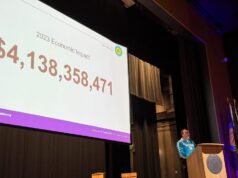
City of OKC homeless strategy implementation manager Jamie Caves took part in a panel discussion on homelessness hosted by the Greater OKC Chamber of Commerce on Feb. 12. While there were no earth-shattering revelations during the 90-minute event, Caves did touch on the funding picture for the program moving forward.
In short, money is still needed, and a lot of it. Housing each Key to Home participant costs about $20,000 to $25,000 per year, Caves said. The program, which aims to change the lives of chronically homeless people through outreach, direct housing support and job placement, has been averaging about 20 individuals each month.
“We’re looking at federal dollars,” Caves said during the discussion. “We started this effort with a lot of COVID dollars, which allowed us to kickstart this effort and demonstrate success. And then private foundations, we’ve been really fortunate to have the support of some philanthropic leaders in the community. Part of my role is to identify gaps and the resources that are needed and then work with the board and the community to secure those resources.”
Among the many corporate supporters and philanthropic organizations that have supported the city’s Key to Home program are the Inasmuch Foundation, the McLaughlin Family Foundation, the Gaylord Foundation, the Oklahoma City Community Foundation and the Kirkpatrick Family Fund.
“Because of the work that we’re doing in the city, we’re getting noticed on the national level, and that is bringing funders — unexpected funders — to the table,” Caves said.
To that end, Caves cited a recent $2.5 million donation from the Jeff Bezos Family Foundation. She said she hopes that support continues to snowball.
“Large foundations and other communities are seeing the work that’s going on in Oklahoma City, and they’re stepping in and asking to be a part of it,” Caves said.
But while successful, Key to Home can only accomplish so much. Former Oklahoma County commissioner and current executive director of Mental Health Oklahoma Carrie Blumert told the panel that OKC’s goal should be to reach “functional zero” homelessness.
“Functional zero homelessness is when the system is such a well-oiled machine that if someone enters homelessness, the system can respond and get them placed into housing within 30 days,” Blumert said. “So that doesn’t mean no one enters homelessness. It means the system works together so well and we have enough housing opportunities and affordable housing to get someone connected to opportunities right away. But we’re not there yet.”
Blumert said economic factors account for the reason most people who become homeless lose housing.
“I would say the two biggest drivers are rising costs of housing and stagnant wages,” she said. “Of course, there are compounding factors — death in the family, addiction, illness — but I would say those are the two main underlying things.”
Caves said more than 90 percent of people contacted by outreach teams at encampments accept the help that is being offered. The problem, however, is there are only so many places to place them when it comes to permanent housing.
OKC is short about 45,000 affordable housing units, according to a 2021 affordability study. For housing to be considered affordable, rent typically must equal about 30 percent of an individual’s gross income.
But City Rescue Mission director Erin Goodin said more than half of OKC residents are spending more than that on rent. While incentivizing development of affordable housing units can be one way to meet demand, it’s a slow process.
“A lot of communities across the country are figuring out creative ways to incentivize developers to build affordable housing, whether it’s a for-profit developer or a not-for-profit developer,” Goodin said. “I think I would love to see Oklahoma City get a little more deep into that (question) of, ‘How can we bring more affordable housing development to the metro and incentivize developers to build affordable housing?'”
Caves said development of new affordable housing units will be critical to the city’s future.
“The middle class is putting more pressure in the middle of the market, and as it pushes down on the market, it’s going to push the people that are at the bottom out,” she said. “So we need to make sure that we’ve got some affordable options for them.”
City conducts annual point-in-time count
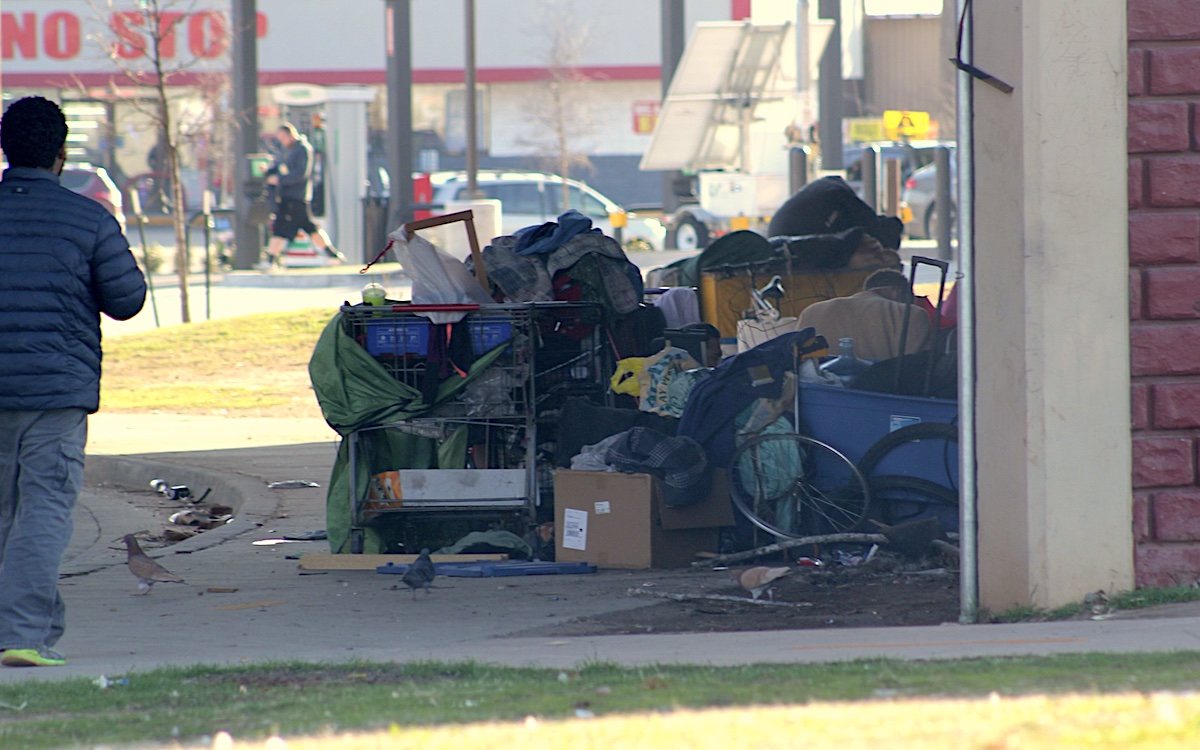
In the hours before a significant winter storm Jan. 25, the City of Oklahoma City worked with partner nonprofits to conduct OKC’s annual point-in-time count, which measures the current homeless population. A final tally will be released later in the year, and it serves as an important metric for those in charge of helping people transition from the streets to a permanent home.
OKC’s 2025 point-in-time count found 1,825 people experiencing homelessness in January last year. City of OKC homeless strategy implementation manager Jamie Caves said this year’s count will likely show an increase.
“I am expecting that we will see a slight increase in the overall numbers,” Caves said at a press conference that concluded the count. “Last year, we had a 2 percent increase. I think that trajectory will hold. I’m hoping that we’ll see an evenness or even a slight decrease in the number of people experiencing unsheltered homelessness in our community. We’ve really worked together to focus on interventions for people who are sleeping outside, and we’re hoping to see a decline in those numbers.”
The count includes people who are sleeping in shelters, in transitional housing, in safe havens and those sleeping outside in encampments. Caves said those surveyed are asked where they slept the night before.
“We pull all of this data and compile it, and then we go through a de-duplication process,” Caves said. “We’ll go through the data and pull out anybody who might be staying at a shelter who also might have been counted during a panhandling shift by another team. There is a lot of input that goes into it.”
The information is then presented to the public in the hopes of raising awareness and understanding of homelessness in the community.
“We compile the information and make sure that it’s accurate and verify it several times, then we break it down into subpopulations, and then we will have a State of Homelessness address in April to share that information with the community,” Caves said.
Senior affordable housing development opens

Aging populations can still be susceptible to rising housing costs, even though many own their homes outright or have significant equity. But having paid off a mortgage does not mean a house is free. Beyond unplanned repairs, the rising costs of insurance and property taxes can be tricky for those on a fixed income.
Oklahoma City’s senior housing stock increased by 43 units in November with the opening of Hillcrest Green II at 3339 S.W. 74th St. Units range from 700 to 800 square feet and rent for between $750 and $1,016 per month. The project was developed by the Indiana-based Midwest Support Foundation. The organization supports affordable housing initiatives through the development of projects, according to its website.
OKC Ward 5 Councilman Matt Hinkle said the development helps fill a growing need for affordable senior housing.
“I wish this were four times the size, because it would fill up instantly,” Hinkle said. “South OKC has a huge aging population that floats on that median income level all the time. I hear all the time about prices going up. We have people who get priced out of their homes because of insurance and other things in retirement, and I think these kinds of developments aimed at that population is something we are going to need more of in the future.”
OHFA releases annual report

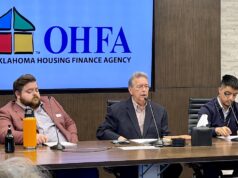
The Oklahoma Housing Finance Agency has released its 2025 report containing an array of statistics on the agency’s impact on housing affordability and accessibility in the state.
By administering federal and state programs, OHFA offers housing assistance to low- and moderate-income families across 77 counties by working with nonprofits and developers.
According to its annual report, the agency assisted 12,578 households with housing vouchers and its Performance-Based Contract Administration program. It also assisted another 221 households with emergency rental assistance.
About 2,400 first-time homebuyers received downpayment assistance on new home purchases.
With possible “tweaks” on the horizon, the agency is continuing to work with leaders of the Oklahoma Legislature to operate the Housing Stability Program passed into law in 2023. According to OHFA’s annual report, the HSP “generated 33 loans in 29 different counties that will lead to the new construction of both for-sale homes and rental communities.”
Kirt pushes housing bills for 2026 session

With the Oklahoma Legislature in its third week of the 2026 session, Senate Minority Leader Julia Kirt (D-OKC) is pushing a trio of bills aimed at increasing affordable housing stock in the state. According to a press release announcing Kirt’s bills, Oklahoma faces a shortage of about 77,000 housing units across the state.
“The best way to address rising rents and home prices and reduce homelessness is to make sure people have more options for homes, but there’s a big shortage of affordable housing in Oklahoma,” Kirt said in the release. “I’ve introduced three innovative bills to increase the availability of the types of housing Oklahomans need to thrive.”
SB 1393 would create a tax credit for the adaptive reuse of dilapidated or abandoned buildings into workforce and affordable housing. The measure advanced out of the Senate Revenue and Taxation Committee on Feb. 9 by an 8-3 vote, but it also must clear the Senate Appropriations and Budget Committee owing to proposed fiscal impact of $5 million per year.
SB 1332 would appropriate $100 million to a zero-interest loan program accessible to cities, towns and counties to support new water infrastructure needed for development. The bill advanced from the Senate Economic Development, Workforce and Tourism Committee by an 8-1 vote on Feb. 10, but it also has been referred to the appropriations committee.
SB 1545, which has been referred to the Senate Local and County Government Committee, would allow faith-based organizations to develop affordable housing as a use-by-right on their properties.
“These bills will help us increase housing that people can afford, improve neighborhoods, strengthen families and grow our economy. We’ll also cut red tape for faith organizations who want to help address the need for more housing,” Kirt said in her press release. “People with stable housing are more likely to stay in the workforce, and their children have the stability they need to do better in school. These would create Oklahoma’s own solutions to one of our biggest challenges.”