

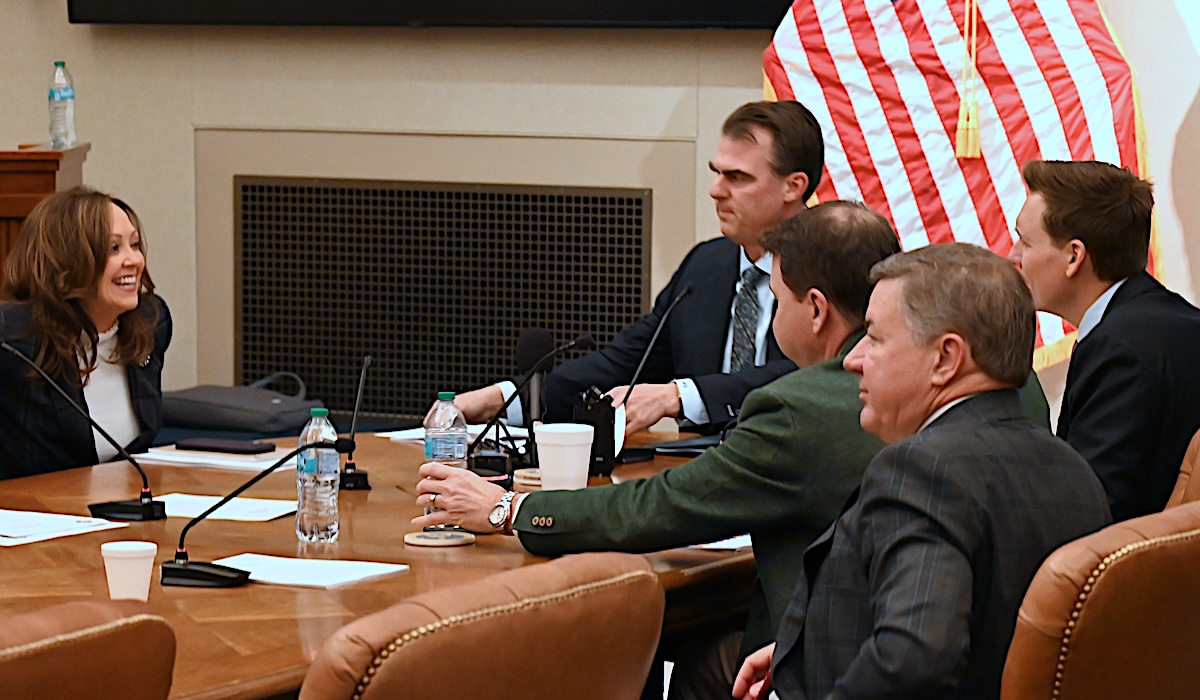

After the State Board of Equalization certified appropriation levels Friday for Fiscal Year 2027, Gov. Kevin Stitt proclaimed Oklahoma is doing “really well” financially — even as legislative budget leaders prepare to pinch pennies in the face of massive agency needs.
The board, which is responsible for certifying tax collections and estimates, authorized just shy of $12.17 billion as this session’s appropriation limit for the Legislature, $123 million more than the board’s previous estimate in December. The increase in the estimate was driven by sales and income taxes, according to John Gilbert, deputy director of Oklahoma Management and Enterprise Services. The state also has $3.69 billion in cash reserves, although $1.78 billion of that is reserved for state’s rainy day and revenue stabilization funds.
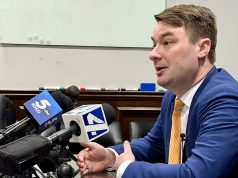
“We’ve collected $459 million more than we estimated that we were going to collect this year, and that doesn’t include the 5 percent cushion that we always keep, so we’ll have an extra close-to-$900 million worth of deposits into our savings account,” Stitt said. “I’ve already got the largest savings account we’ve ever had, and this is just good news that means we can strategically invest in things.”
Despite Stitt boasting of “very good news” to reporters, legislators remain more leery. Sen. Chuck Hall, who chairs the Senate Committee on Appropriations and Budget, noted a different nuance in the numbers. With the Legislature approving a trio of big-ticket capital projects in the 2025 session, the $12.17 billion total appropriation authority certified Friday is actually $571 million less than lawmakers had at their disposal last year.
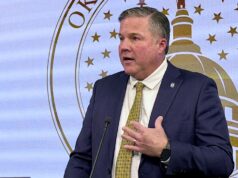
“While the revenue estimates certified by the board today have improved since December, the growth is not enough to change the reality that this will be a challenging budget year,” Hall (R-Perry) said in a statement. “Oklahoma’s economy remains stable, but the demands on our state to maintain core government services are not insignificant.”
Hall’s press release said about 80 percent of the state’s executive branch agencies have requested a budget increase for FY 2027, while new budget needs for education, infrastructure and health care have emerged. Changes and reductions to federal aid programs including the Supplemental Nutrition Assistance Program and Medicaid mean new responsibilities for the state are looming, too.
“These include $25 million in increased SNAP administrative costs next year, with the potential for $250 million in SNAP cost increases the following year if we cannot reduce the state’s error rate,” Hall said. “There’s also a new request for $495 million to cover ballooning Medicaid costs.”
In the short term, the messy Medicaid books mean Oklahoma leaders will likely have to dip into its FMAP Rate Preservation Fund, a cash reserve intended to limit the impact of fluctuating federal matching percentages. Currently, the fund has a projected balance of $535 million. House Minority Leader Cyndi Munson (D-OKC) criticized the federal government for complicating Oklahoma’s health care equations, while also spreading blame to tax cuts pushed and approved by her Republican colleagues in recent years.
“Today’s Board of Equalization meeting made clear what we already suspected, that finalizing the state’s budget to best accommodate every state agency and serve all Oklahomans will be difficult,” Munson said in a statement. “There are many reasons why this is the case, for instance, failures at the federal level have left Oklahoma without crucial federal funding. This past year, we have also seen statewide income tax cuts that only benefit the wealthiest Oklahomans and do nothing to invest in core services for everyday folks.”
Only a portion of the annualized impact from the 0.25 percent income tax cut passed last session affected Friday’s FY 2027 projections, but Stitt credited the cut as the reason revenues ended up higher than their December projections.
“The idea is that we have more taxpayers, not more taxes,” Stitt said. “So we’ve got more people moving into Oklahoma. We’re top 10, as you know, of people moving into our state, businesses expanding. Because when you’re a pro-business state, it actually delivers more revenue, and that’s what I remind people: ‘Hey, when we have our businesses and our economy thriving, it helps education, infrastructure, everything.'”
Stitt’s confident claim came less than a month after Devon Energy and Expand Energy both announced plans to move their headquarters to Houston — developments that have hung in the air of Capitol hallways over the first two weeks of session.
When asked if he expected the Legislature to dip into cash reserves this year, Stitt chuckled and said, “Probably.”
“There’s some free cash that they can use, and that’s up to their discretion,” he said. “I’m trying to keep them to — let’s just, let’s not raise expenses, right? Let’s not go out and obligate — like in your own budget, right? You don’t want to spend more than your monthly income, right? You don’t want to take savings and raise your your monthly ongoing expenses. You’re going to be putting yourself in a bad situation. Now, if you’re going to invest in a road or fix a roof or capital expenditures — a one-time item — that’s what we use savings for.”
However, Hall noted the cash reserves were “somewhat” depleted by the major one-time allocations last session, including a prison purchase, a new veterinary hospital for Oklahoma State University and a new pediatric heart hospital for the University of Oklahoma.
“It is clear that there will be reduced government spending,” Hall said.
Senate Appropriations and Budget Committee Vice Chairman John Haste painted the situation as a chance to limit the size of Oklahoma’s government.
“The Legislature will have approximately 4.5 percent less revenue available for appropriation next year, which means it’s time for us to look at how we can tighten our belts,” Haste (R-Broken Arrow) said in a statement. “While these budget figures present some spending limitations, they also present an opportunity to streamline state government and ensure agencies operate as efficiently as possible.”