

Tuesday’s elections for municipal offices came and went without Oklahoma voters having public access to candidates’ financial reports.
More than three months after a new law began requiring local candidates to report their quarterly fundraising and expenditure totals to the Oklahoma Ethics Commission instead of city and county offices, candidates still have no way to do so.
“People went to the polls [Tuesday] and voted in the Oklahoma City mayoral race and all those Norman City Council races, and the public absolutely had zero idea who funded those campaigns and what those campaigns spent their money on,” said Aaron Wilder, who runs the consulting firm Wilder Campaigns. “Mayor [David] Holt had $200,000 in his campaign committee at his last report that he had, so who knows how much more he raised and what he spent his money on.”
When SB 890 took effect Nov. 1, it required candidates for county, municipal and school board elections to file campaign finance reports and personal financial disclosures at the state level instead of local clerks or election boards as they did previously. The change to centralize local campaign records was lauded as a major step toward transparency in Oklahoma.
But as the Ethics Commission’s database upgrade to Guardian 2.0 floundered in the fall and fully fell apart in December, the agency reverted to its original Guardian System, which has no functionality for local candidates.
“I have tried to look at backup methods and things we could do and wasn’t given an alternative,” said Ethics Commission executive director Lee Anne Bruce Boone in an interview Wednesday. “I don’t want to say bad things about [the Office of Management and Enterprise Services], because they’ve been a huge help to us in this process, but they just they don’t have the resources to do that, is what I was told.”
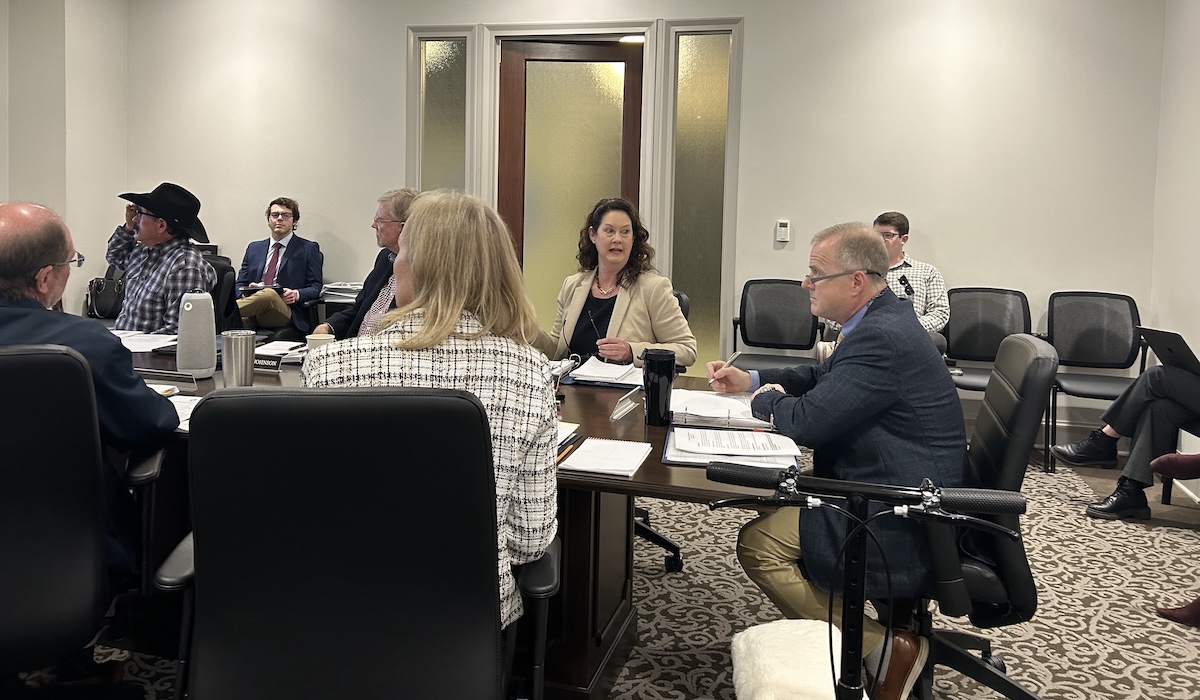
At a commission meeting Thursday, Bruce Boone estimated it would take 12 to 15 weeks for Civix, the software company that developed the Guardian System, to update the platform to accept local candidate reports. In the interim, she said she will continue to pursue other possible solutions, although options seem limited.
“We don’t have the ability for 3,000 new filers to send all of their reports to our office with the limited staff that we have,” she said. “We want to make sure that it’s accurate, that we have integrity in our reporting. We want to be transparent. This is a problem, let’s be honest. And it’s a problem, one, because we had to terminate our contract (with the developer of Guardian 2.0).”
For Wilder, the issue is not just about ensuring transparency. He remains concerned that state law is being broken. Title 11, Section 56-106 requires municipal officers to follow the state’s official ethics rules, and Ethics Rule 2.101(A) requires candidates to file a pre-election campaign finance report no later than eight days before the election.
“I don’t see in the statute any function of law where that’s legal for them to make the decision to just put a basic moratorium on local ethics reporting,” Wilder said. “They don’t have that authority. They’re instructed to take the reports and make them available to the public.”
To that end, Bruce Boone said the commission can still request and disseminate reports if asked, a similar intermediary stance that the agency adopted while Guardian 2.0 was in its beta phase and the public could not review reports for state officials.
“If anybody has a concern about a particular [report], I know we’ve reached out and gotten those and been able to supply those for somebody that has a question or has an issue,” Bruce Boone said Wednesday. “But we’re not requiring [candidates] to file them with us right now, currently, because we don’t have a place to put them for transparency, and we don’t have a way to do that in our current system, nor do we have a way to do that through OMES at this time.”
In a late-January email to a local official’s representative, the Ethics Commission’s compliance officer said candidates should continue tracking their campaign reports for when they are eventually able to be uploaded.
“Our Guardian online reporting system is not yet set up for local candidate registration or report filing,” the Ethics Commission employee wrote. “At this time, we request all local candidates continue to keep records of contributions and expenditures, and be prepared to register and file reports when the system is ready.”
In the meantime, Bruce Boone continues to explore possible solutions until Civix gets a new filing system online. She dismissed the possibility of returning to city clerks and county election boards processing finance reports.
“We already investigated whether or not [we could] just have these filed locally again for a short time period. Is that an option? Well, the statute says that they have to be filed with us, so we can’t really go backwards due to that statutory language,” she said at the meeting Thursday.
Since returning to local filing is not an option, Bruce Boone suggested temporarily increasing the Ethics Commission staff size to process the reports manually. She proposed having a technology company create a temporary repository for the public to access campaign finance reports, although she advised the company would have to have an active statewide contract, otherwise the commission would have to send out an RFP — a process which could take as long as it takes for Civix to get new software online.
The Ethics Commission took no official action on selecting a potential solution, but Commissioner Adam Weintraub, who served as the chairman of the meeting, advised Bruce Boone to continue trying to find a feasible solution.
‘From 11 to midnight’: Filing halt leaves voters in the dark
Some voters have already taken notice of what they can’t see about local candidates’ campaigns.
In Norman, a city council race grew contentious after some candidates disclosed their own finances, while others did not. Dianna Hutzel, Trey Kirby and Shaista Fenwick ran for the city’s Ward 5 seat Tuesday, with Hutzel (47.98 percent) and Kirby (26.53 percent) now heading to the April 7 runoff. Kirby and Fenwick released their campaign finances on Facebook, but Hutzel has not, which drew criticism in comments and posts to Facebook.
Dave Moore, a cybersecurity professional who owns property in Ward 5, believes the election should be nullified because state ethics laws and rules were broken.
“The whole reason for that law — I guess it’s a law — that compels financial disclosure by candidates is so people can know where the money’s coming from, who’s behind the campaign, and who’s supporting it. That’s important to know,” Moore said Wednesday. “It’s hard for people to make an informed decision about who to vote for if they’re being denied the information that they’re legally entitled to. Somebody above my pay grade needs to get in there and start figuring this out.”
While he learned of the reporting issues through his community involvement in Norman, Moore said he had an “epiphany” when considering the statewide implications.
“Honestly, when you think it through all the way, it kind of calls into question all of the elections in the whole state that took place [Tuesday]. I mean, how many other elections are out there where people aren’t getting the financial disclosure information?” Moore asked. “I would imagine it’s a lot, because if it’s happening in Ward 5 in Norman, Oklahoma, it’s got to be happening all over the place.”
While Wilder expressed disappointment that seeking transparency from local candidates is now harder than it was before, he readily acknowledges prior challenges the new statewide reporting law was intended to address.
“We were in a bad ethics situation before, because the Ethics Commission was still the responsible party for compliance. Those city clerk’s offices, or your local district attorney — no one had oversight of those reports. So it was really even not even that good, because it didn’t have anyone actually checking on it. I mean, I promise you, the Oklahoma Ethics Commission was not looking to see if anyone in Oklahoma City had been filing their reports,” Wilder said. “And so what you would see at the municipal level already is missing reports, weird information that doesn’t add up, strange things happening in contributions and expenditures that just seem to fly completely under the radar.”
Before the Ethics Commission became the entity responsible for collecting and posting local election reports, Wilder said county election boards and city clerks provided finance forms with “varying levels of standardization.”
“Largely speaking, I mean, it was just — it was not awesome. So it’s not like we’ve been in a really great situation,” he said “It’s not like some like fall from, ‘We’ve had really awesome ethics or something, and now we don’t.’ This is kind of just — we’ve gone from 11 to midnight.”
Wilder said he remains excited for when the transition to filing with the Ethics Commission will be achieved, as he believes it will be easier to “analyze what’s happening in local elections” with campaign finance reports centralized.
“These changes were desperately needed,” Wilder said. “And, by the way, not to beat up on the Ethics Commission — they have been so under-resourced for so long, and even in the recent years that they’ve been given increases in their budget by the Legislature, [the increase is] pitiful.”
Other campaign professionals share Wilder’s concerns. Kinsey Westwood, who has long helped candidates with campaign compliance, said the issue needs to be addressed quickly.
“The outage of The Guardian, its transition to version 2.0, and subsequent reversion to the original platform created confusion and concern among candidates, particularly those running in local municipal and county races,” Westwood said. “Fortunately, the Ethics Commission has been responsive and helpful in guiding candidates through the situation.”