


Drama at the Oklahoma Department of Mental Health and Substance Abuse Services is as long-running as the agency’s cumbersome name.
As revealed over the past year, the department’s woes remain as convoluted as its acronym. Among other problems, ODMHSAS is currently weathering a budget crisis, a consent decree for a lawsuit alleging the agency violated its patients’ constitutional rights and criticism of its contracted services through certified community behavioral health clinics.
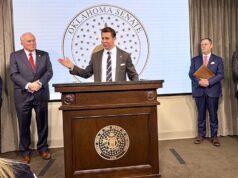
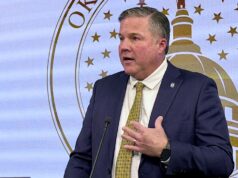
Retired Navy Rear Adm. Greg Slavonic has taken control of the agency as commissioner on an interim basis, although he has extended his planned exodus through the end of this year’s legislative session in May.
Slavonic was appointed by Gov. Kevin Stitt after the Legislature fired Commissioner Allie Friesen in the midnight hours of the 2025 session. Whoever succeeds Slavonic may have a short term, however, as Stitt’s replacement is likely to clean the proverbial Cabinet shelves.
While questions about who will lead the agency when Fiscal Year 2027 starts July 1 can be kicked down the road, other issues — ranging from funding decisions to potential state agency overhauls — need answers sooner than later.
“It takes a long time to turn a big ship around,” Senate Appropriations and Budget Committee Chairman Chuck Hall said recently. “But we’re starting to stabilize.”
As the ODMHSAS barge bails water and barrels toward shore, the following five questions have lingered into the 2026 legislative session.
Can ODMHSAS regain the Legislature’s trust in handling its own budget?
As commissioner last year, Friesen sounded the alarm on longstanding ODMHSAS budget practices that raised red flags for the Legislature and spurred a series of investigations.
After hours of public hearings and private meetings, lawmakers learned that previous administrations would overbook contracts, use the leftover funding for other efforts within the agency and pay previous-year bills with current-year money. Friesen characterized the practice as an “intentional structural budget deficiency,” but her team struggled to provide the Legislature with accurate assessments of the needs at hand.
As confusing shortfall estimates fluctuated anywhere from $6.2 million to $63 million, the Legislative Office of Fiscal Transparency eventually determined ODMHSAS’ budget hole was approximately $30.6 million, and the Legislature approved supplemental funding for the agency to survive Fiscal Year 2025.
Legislation
Review these mental health-focused bills being watched by the Healthy Minds Policy Initiative..
Facing their May adjournment deadline with lingering ambiguity about exact needs, however, lawmakers punted tougher decisions about Fiscal Year 2026 appropriations to February, receiving a commitment from Friesen that she would not cut services until the Legislature returned this year.
Then lawmakers fired Friesen, Stitt appointed Slavonic, and the interim commissioner reviewed hundreds of contracts and chose not to renew about $40 million of them in October.
With legislators back in the building and Slavonic painting ODMHSAS’ current fiscal picture to budget committees, the resulting portrait appears daunting. The agency has requested:
- $19.7 million to close out its books for Fiscal Year 2025, which ended seven months ago;
- $20 million to cover the rest of Fiscal Year 2026, which ends June 30;
- $42.5 million more for Fiscal Year 2027 to cover Medicaid obligations and “technology modernization”; and
- $17 million to cover consent decree costs for Fiscal Year 2027.
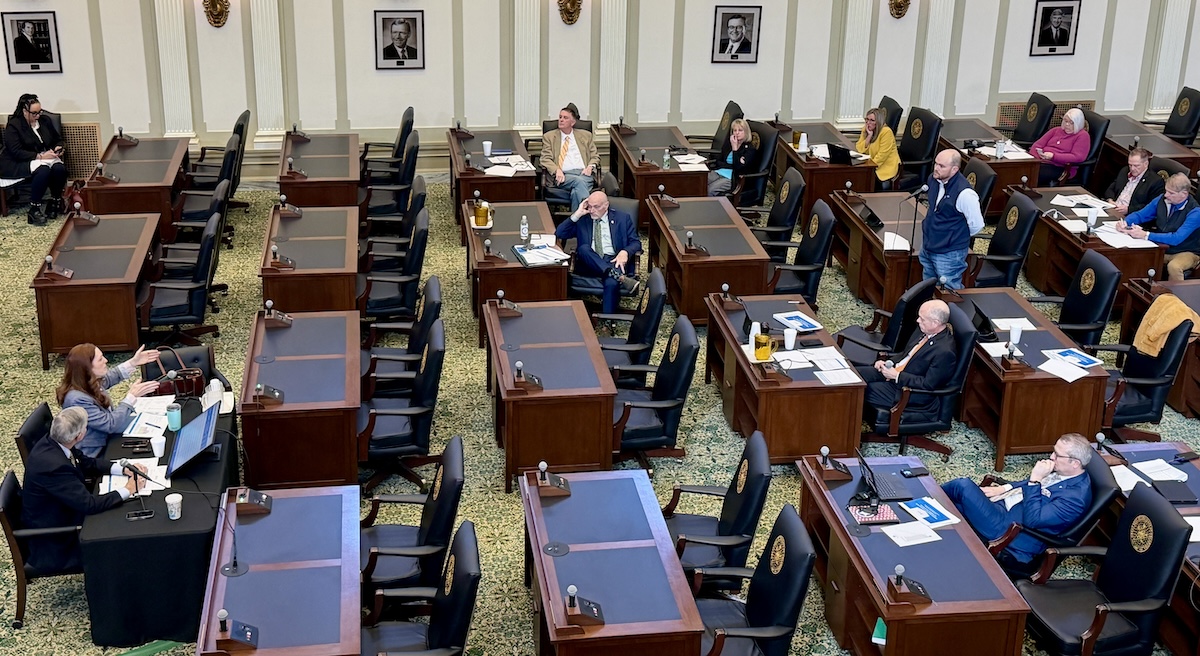
House Appropriations and Budget Committee Chairman Trey Caldwell (R-Lawton) said ODMHSAS’ budget needs pose a significant challenge for lawmakers this session.
“It is my understanding that they have bills that they need to pay from FY 25,” Caldwell said before turning to the current FY 26 supplemental request. “We made a conscious decision last year not to give them the money they needed then, because we were not confident in their numbers yet.”
Asked about the agency’s funding requests spanning three fiscal years, Caldwell pointed to the seriousness of last May’s decision to remove Friesen.
“We saw last year at the end of session where for the first time in over 100 years, we fired a director of an agency. So yeah, there’s still some valid concerns that we have with mental health,” Caldwell said. “I do think they’re starting to work through it. We trust that the admiral and his staff are doing better a better job than was being being done, but we still have some legitimate concerns about the overall health of [ODMHSAS].”
Last session, the Legislature passed HB 2785, which requires the Office of Management and Enterprise Services to review ODMHSAS’ finances each month to ensure the agency stays within its budget before receiving piecemeal disbursements of its FY 26 appropriated budget. The bill also orders OMES to review any multi-year encumbrances and to prohibit any non-budgeted purchases ODMHSAS might attempt to make. It also bans OMDHSAS from entering into contracts without a clearly defined maximum fiscal obligation.
Slavonic refers to the legislation as the “‘Mother, may I?’ bill.”
“[It] keeps us honest, and it’s very painful for my team to be able to go and have to present that information to OMES, but we do it, because that’s a requirement, and so, it is what it is,” he said at a House Appropriations and Budget Committee hearing Jan. 29.
During that hearing, House Majority Leader Mark Lawson characterized the legislation as “disciplinary.”
“People can call it what they want, but I think the truth of the matter is that was not about asking permission,” said Lawson (R-Sapulpa). “That was more about — that was disciplinary. That was a reminder to the department that when money is appropriated, it is to be spent the way that the legislative branch of government dictates that it be spent.”
If complying with HB 2785 has been painful, some of the agency’s efforts to tighten its belt have been, too. One of Slavonic’s first acts was to review at least 573 contracts with mental health and substance abuse service providers, although he told legislators at the hearing the number was above 800. Of those reviewed contracts, the agency canceled more than 300.
“I had two meetings, and I can remember bringing in all the providers, walking them through what the process was going to be, and telling them that it was going to be a very painful process, but that it needed to be done,” Slavonic testified. “Because, at the end of the day, the agency was spending money that we didn’t need to spend, and we needed to spend money within our budget.”
At the hearing, Slavonic said he hopes changes he has made will position his replacement for success.
“This agency isn’t going to be healed by the time I leave at the end of session,” he said. “The agency didn’t get in this position within with the last [commissioner]. It took several months for it to get in this situation, and so I believe that we are headed in the right direction.”
When will ODMHSAS meet consent decree requirements?
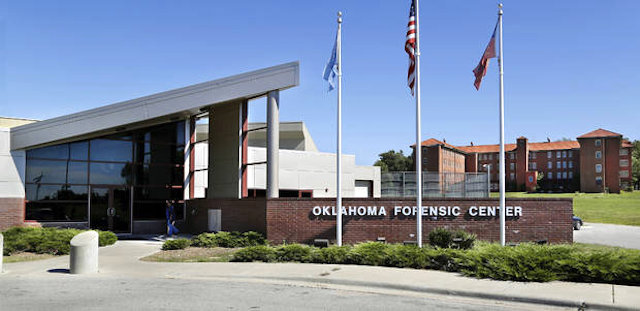
Beyond its other duties, ODMHSAS is responsible for evaluating criminal defendants to determine whether they are mentally competent to stand trial. If they are not, the agency then is responsible for providing care in the hope they will be restored to competency so criminal adjudication can continue.
With the Legislature’s blessing in March 2025, ODMHSAS entered into a consent decree to settle a lawsuit that alleged the agency’s failures on this front had created unconstitutionally-long wait times for those in need of evaluations and restoration services.
A report from court consultants overseeing the settlement recently found that the agency remains behind in terms of reaching already-overdue deadlines set in the consent decree. Meanwhile, the number of individuals awaiting restoration services has grown from 138 people on Nov. 10 to 218 on Jan. 13.
“We were in good shape. In November, the trend lines were heading in the right direction,” Slavonic said at the Jan. 29 House Appropriations and Budget Committee hearing. “We need to research that. I need to get with my legal team to find out why the trend lines are going in the opposite direction, because we were making good effort, and then all of a sudden, come Christmas, it started creeping back.”
The court consultants also criticized ODMHSAS for failing to have an official plan in place to improve competency restoration services as required by the decree. They also recommended ODMHSAS appoint an individual whose sole focus is helping the agency come into compliance.
Caldwell said lawmakers are “concerned” by ODMHSAS’ delays with consent decree compliance.
“I think we’re still in the process of realizing that the Department of Mental Health doesn’t have a plan yet or know how to properly implement it. They missed their first deadline, so we’re going to pay maximum fines this year,” he said. “I do think that they’re trying to put together something to maybe prevent that from happening next year. That’s been my thing that I’ve continued to advocate for. We’ve got to start turning the ship around, and I haven’t been super excited with the progress in that endeavor.”
In the budget hearing, ODMHSAS formally requested $17 million that would be dedicated to the consent decree. According to interim CFO Cathy Menefee, some of that money would cover “increased legal expenditures” and “increased fines” that are anticipated as the maximum allowed penalties for noncompliance penalties climb in the second year of the consent decree.
To that end, the agency has incurred the maximum $3.5 million in fines so far, according to Maria Chaverri, ODMHSAS communications coordinator. Under the decree, those fines are placed into a bank account and “must be used for the purpose of funding or supporting services for people experiencing mental illness and competency issues in Oklahoma who are charged with criminal charges, including the class members, and which the department is not otherwise obligated to provide by law or under this consent decree.”
Chaverri said eight people will ultimately be chosen to serve on a committee that will approve uses of the penalty funds. While she said the individuals have yet to be selected, two will be representatives of ODMHSAS, two will be appointed by the Attorney General’s Office, two will be chosen by class counsel and two will be appointed by the trio of court consultants who are overseeing compliance with the decree.
Follow @NonDocMedia on:
Facebook | X | Text or Email
Will the Legislature consolidate Medicaid under one agency?
The Oklahoma Health Care Authority is the primary state agency tasked with administering Medicaid dollars, which are derived from an ever-shifting formula called the Federal Medical Assistance Percentage, or FMAP. As the state’s economy improves, Oklahoma is required to cover a greater percentage of its Medicaid program, called SoonerCare. As it worsens, the federal government picks up more of the tab.
But while OHCA is the sole state agency with which the federal Centers for Medicare & Medicaid Services will contract, the last decade has seen lawmakers divide the authority for handling the state’s matching dollars among a dozen agencies, including the Department of Corrections, the Office of Juvenile Affairs and ODMHSAS.
Former ODMHSAS leaders advocated for their agency to administer Medicaid funding for mental health treatment in an effort to ensure those specializing in behavioral health have a say on where the funding goes. When ODMHSAS’ budgeting problems were revealed last session, however, it sparked conversations about ending the “bifurcation” of Medicaid and returning all SoonerCare reimbursement processes to OHCA.
“Those talks are ongoing,” said Hall, the Senate’s budget committee chairman. “It just takes time for us to vet these things through. (…) Now those lines of communication are wide open, and so as we look to address the whole universe of mental health care, those conversations will be ongoing.”
While House leaders also expressed interest last year in potentially returning the state’s mental health Medicaid reimbursement system under OHCA, recent issues revealed by the Health Care Authority’s budget presentation to the State Senate may be pumping the brakes on the idea. Just to maintain its current coverage capacity, OHCA is requesting a $494 million increase in appropriations for FY 27, a gap that the agency’s new director blamed on miscalculated estimates in his predecessor’s administration.
That claim is already drawing questions from members of the OHCA Board.
“As the vice chairman, I have asked for the actuarial studies to support their position, and I was promised to get those months ago, but I still haven’t,” said Alex Yaffe. “I am anxious to see those numbers so we can provide the oversight and policy direction that is required of us by statute.”
Will ODMHSAS be split up or reformed?
While the agency he directly manages awaits an answer to its $494 million question, OHCA’s new director, Clay Bullard, is also leading preliminary conversations with legislators about whether consolidating some or all of ODMHSAS’ duties other under agencies would be a sensible reform. Bullard also serves in Stitt’s Cabinet as his broader secretary of health.
Asked about Bullard’s nascent idea for a potentially massive reform, OHCA’s public information officer declined to comment ahead of upcoming conversations on the topic. But rumors and questions about what such a proposal could ultimately look like have permeated State Capitol hallways in recent weeks.
Among the options floated for consideration would be the consolidation of some ODMHSAS activities under the State Department of Health and the transfer of facility operations to the university hospital systems run by the University of Oklahoma and Oklahoma State University.
Hall said he is “aware of the plan” but that he “wouldn’t even call it a proposed plan at this point.”
“I have heard that. It’s my understanding that the governor’s Cabinet secretary is the one that may be out talking about this as an option,” Hall said. “It’s my sense that this idea has been floated, and the Cabinet secretary is just interested in direct feedback. I think that we’ll need to really be taking into account the thoughts and consideration of our university partners, both at OSU and at OU, as we see if this is even a remote possibility. But at this point, it is just high-level discussion of, ‘Is this an option?’ And I really feel that the Cabinet secretary is genuine in wanting feedback on what the Legislature might think about something like this.”
Hall said he is withholding judgment so early in the discussions, but he said all parties want to see an efficient and effective mental health system in Oklahoma.
Keith Reed, the commissioner of health who leads the Oklahoma State Department of Health, confirmed Jan. 14 that discussions were percolating on the potential consolidation of ODMHSAS under other agencies, such as the one he runs.
“I’ve just heard rumors that they are talking about trying to troubleshoot on what to do with Department of Mental Health and the fiscal issues,” Reed said. “I don’t have any information on what the plan actually would look like or what they’re considering or anything. As an agency, we’re just always there, prepared to step up where we’re needed, where we can help.”
What, if anything, might criminal investigations reveal?
Last year, Rep. Carl Newton (R-Cherokee) asked Legislative Office of Fiscal Transparency director Regina Birchum whether she thought ODMHSAS’ financial woes were the product of poor budgeting practices or “malfeasance.” Birchum credited the agency’s issues to the former, but nebulous accusations of intentional wrongdoing have persisted.
Some of those accusations were suggested by Friesen, who testified last year there was “abuse, negligence and likely corruption” in previous ODMHSAS administrations. One former deputy director, Heath Holt Hayes, has been charged with embezzling money from an ODMHSAS-run nonprofit, and the lingering nature of his pending plea agreement has left some wondering whether separate criminal charges could follow for others in previous administrations.
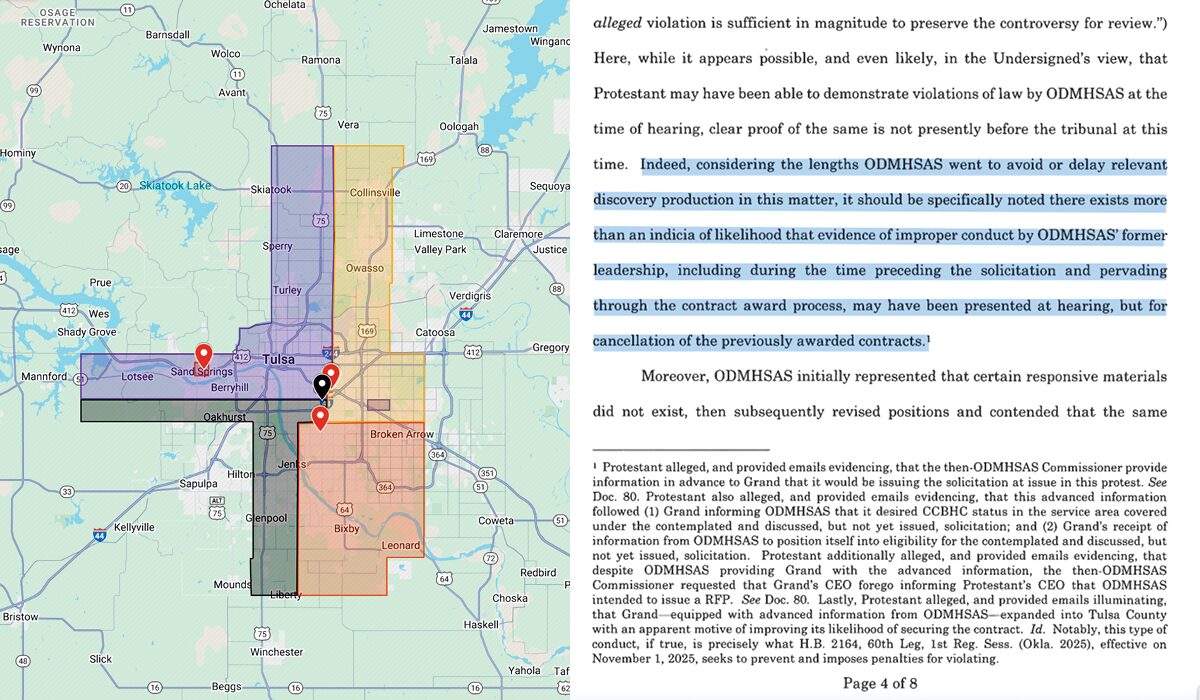
An administrative law judge ruled last September that ODMHSAS “likely” violated the law by giving advance information to GRAND Mental Health officials ahead of awarding a lucrative RFP regarding catchment areas in Tulsa County. Two other certified community behavioral health clinics, Family & Children’s Services and CREOKS, appealed the 2023 RFP decision, and in 2025, ODMHSAS decided to redraw the catchment areas. The 2023 RFP was bid under the administration of former Commissioner Carrie Slatton-Hodges, who did not respond to a phone call seeking comment about the situation.
“I know, at one point in time, there were multiple investigations into the Department of Mental Health and some of their employees that ranged everything from grand juries to the special committee in the House, to the state auditor, to the attorney general, to multiple federal three-letter agencies,” Caldwell said earlier this year. “I do not know if any of them are still ongoing. I have no confirmation of that, but I do know, at one time, there were up to, like, seven investigations into them. For different things, not all the same thing.”
Tulsa County District Attorney Steve Kunzweiler said the administrative law judge’s report was “referred to law enforcement,” but he declined to answer questions about the allegations.